 |
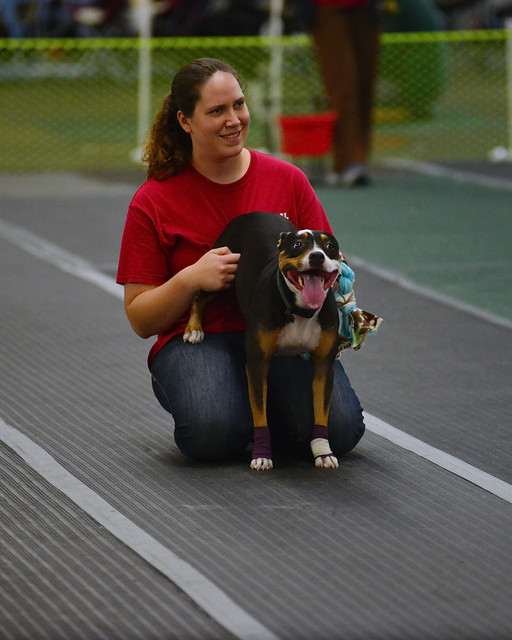
| Me and Koira in the summer of 2013 |
Training dog sports in non-positive methods doesn't make sense to me. I do dog sports in order to have fun with my dogs in a structured way. Titles achieved are a mark of our progress, and as such, the same title can mean hugely different things for different dogs. Ptera, for example, has her FDCh-G title in flyball, achieved after a mere 6 months of playing flyball. I am absurdly proud of her for this. Koira, on the other hand, earned that same title three and a half years after her debut tournament.
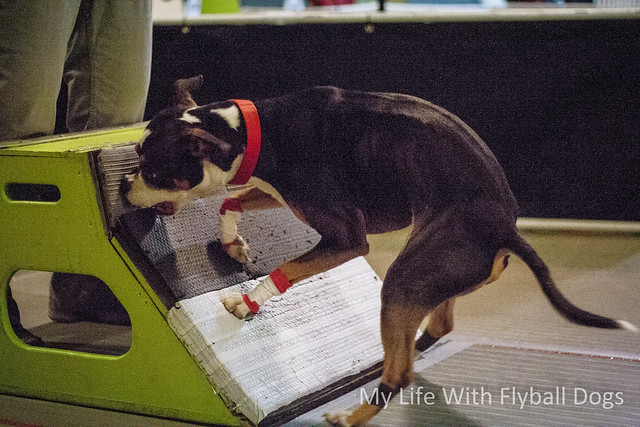 |
| Koira's turn in early 2013. She was enthused about the sport, but I was struggling with training her turn |
As proud as I am of Ptera, it doesn't compare to how I felt when Koira earned that title. The journey it took to get that far was a long and winding path. Koira sat out of flyball for months at a time to give her brain a break and because she just didn't seem into it. I loved flyball and continued to play with Pallo in the meantime, bringing Koira back into the sport every so often when I had new ideas of how to get her engaged. I finally seemed to figure out the right combination of training for her, with the help of many, many flyball people, teammates and otherwise.
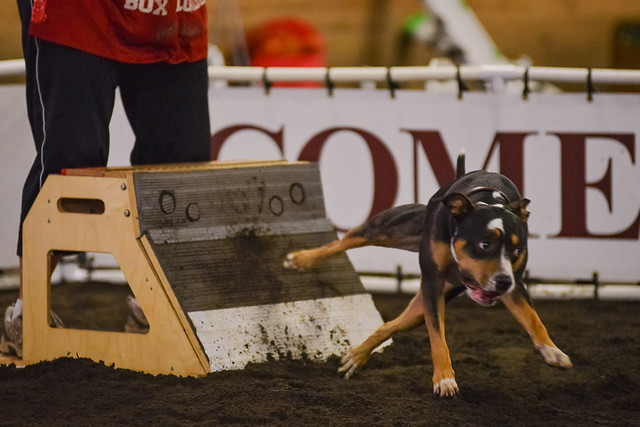 |
| Koira in the early fall of 2013. Something clicked that year. |
The first hurdle with Koira was getting her into flyball. She has always enjoyed doing things with me; the trick was to get her to enjoy doing something that involved running away from me. We tried a ton of different tricks, including putting a tunnel in instead of the jumps, working on different toys and treats, and probably a million other things I have long since forgotten. When she just didn't feel like it, we took breaks, sometimes months long, from practice and tournaments. Eventually, Koira started finding the game fun. I found the right combination of motivators for her, and figured out how I needed to interact with her at flyball for it to be fun for her.
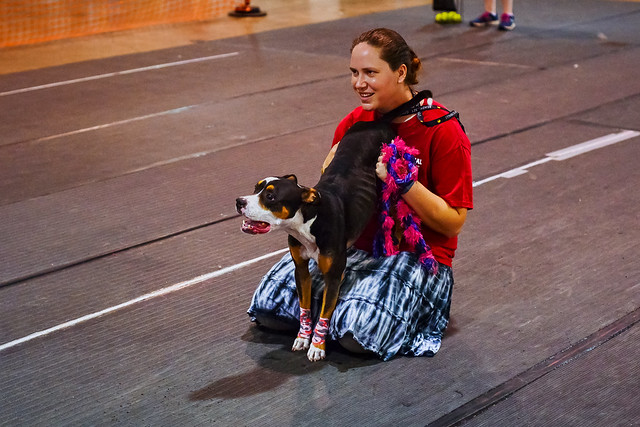 |
| Excited and ready to go in 2014 |
I can actually still remember the moment I felt like it all kind of clicked into place for us. We were in California at a U-Fli tournament, and I believe I had Koira running in Singles while Pallo ran on a team lineup with Gold Coast Flyers. I ended up just running Koira in her warm up and then pulling her from racing because her turn was terrible. A few awesome people offered to help me with her after racing on Saturday because I was despairing of Koira ever being ready to run. At this point, we were over the hurdle of getting Koira to love flyball and enjoy playing. But we still hadn't figured out the right training for her turn to end up safe enough for her to run in tournaments. Generous people brought out dogs to demonstrate a few drills, watched me run those with Koira, corrected me, gave me notes and feedback, and were just all around amazing and helpful. And those people gave me the tools I needed to work with Koira in a way that we could be successful in flyball.
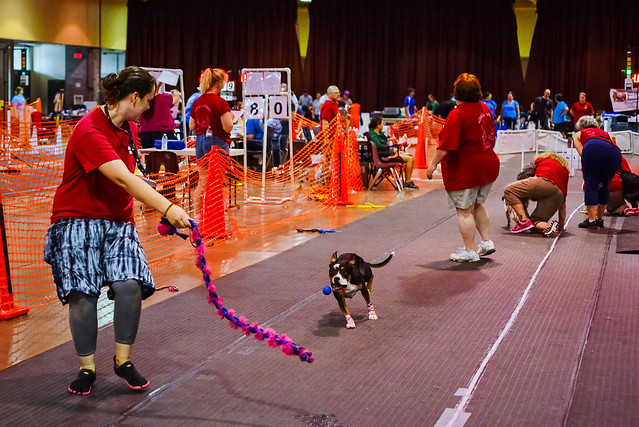 |
| Focused on her tug like a pro in 2014 |
Koira was pulled from flyball competition for months after that. Instead of running lineups and doing our same old thing, we worked new drills and changed things up. And while Koira will never, ever in her career have the most amazing turn ever, and occasionally still has horrible cringeworthy turns, she did develop a safe turn that even managed to be gorgeous occasionally.
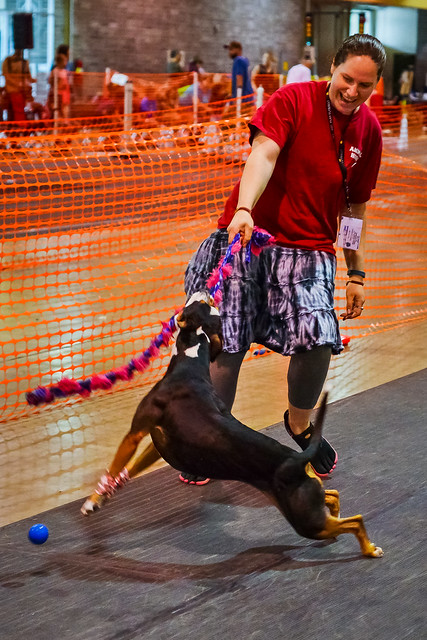 |
| Having fun, 2014 |
I have had plenty of people ask me why I kept trying to get Koira to play flyball, both when we were working on motivation, and when we were working on her box turn after that. I've had the occasional person say that I am horrible to keep playing this game with a dog who didn't enjoy it (back at the beginning). But it was never that Koira didn't have fun during training, it was that she didn't really find the activity itself rewarding. I could have easily given up, found something else for us to do together, and said that was that. But I knew that if I found the right way to show her it was fun, Koira would love the sport. I was developing as a dog trainer, and Koira was the dog I made all my mistakes with. As a consequence, she taught me more than any other dog I have had the pleasure of working with, and likely more than any other dog ever will (though I fully expect to learn from every dog I work with).
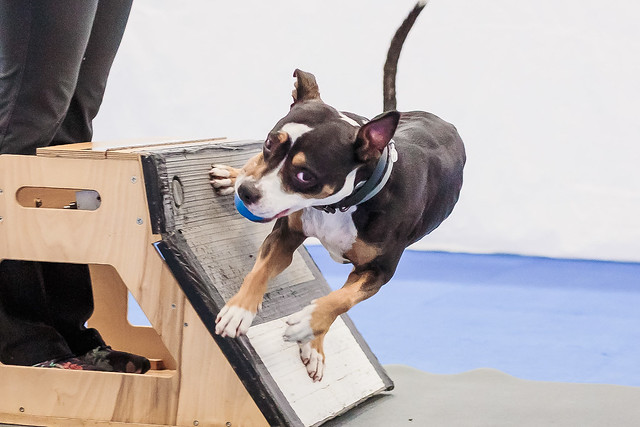 |
| Box turn in 2016. It isn't always this good, but sometimes it is, and I am always amazed and thrilled |
The lessons I learned from my journey with Koira aren't all easy to put into words. But the most important ones are easy.
- Have fun with your dog. If your dog isn't having fun, stop and reassess. Either find a way to make it fun, or stop doing it until you can, whether that means stopping for the day, the month, the year, or for life.
- Play with your dog. Play in as many different ways as possible. By making more things fun, and introducing new things in fun, playful ways, you can pretty much talk your dog into loving almost anything.
- Develop trust with your dog. Trust that you will keep them safe, of course, but also trust that if you tell them something is awesome, they believe you. Sometimes that means being really careful of how you introduce something new, and of how you use it.
A deep trust with a history of fun and play is more valuable than just about anything else. You don't need to do dog sports to have this, but you do have to interact with your dog and spend time doing things together consistently and on an ongoing basis. Dog sports help develop this sort of bond, because the amount of time needed for training forces the opportunity to spend time together having fun. And for many people in the dog sport world, earning titles, or Qs, or a Pronounced, or whatever other markers of achievement your sport of choice awards, simply marks the journey you've been on, and shows you how far you've come together. For one person, a Flyball Dog title, the first you earn, is no big deal. For someone else, it may mark the successful achievement of a goal years in the making.
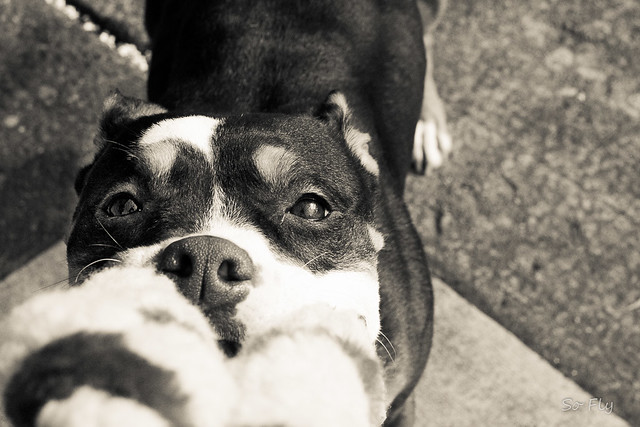 |
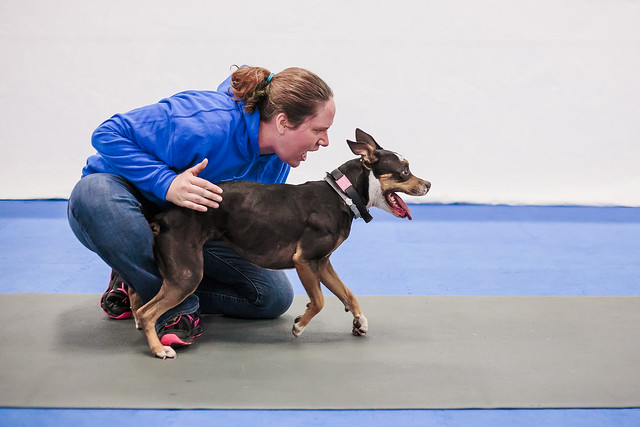
| Interact. Have fun. Make sure you are both having fun. |
At the end of the day, dog sports are a way for us to have fun with our dogs. They give us ways to challenge ourselves, an excuse to spend time working with our dogs, and often a great feeling of achievement when goals are met. And our dogs should enjoy the process as much as we do.