We received PEAK food for the month in exchange for our honest review. We were not compensated in any other way.
We're a bit closer to the end of our month of Rachael Ray PEAK food trial than the middle, but I wanted to give a midway update as well as a final one next week when we finish off a full month on the food.
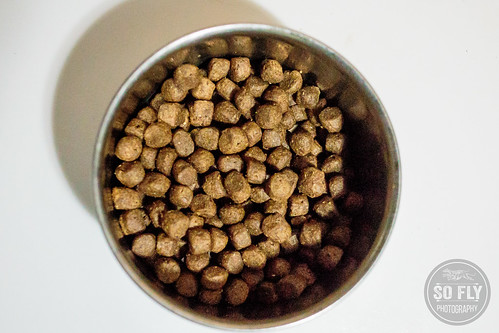
A bowl full of Peak
The dogs are still super excited for meal time. Enthusiasm for the food hasn't gone down at all, and Ptera is happy to work for the kibbles as rewards instead of treats. (Which is just silly, given how many treats I have in the cupboard for the dogs, but use kibble instead.)
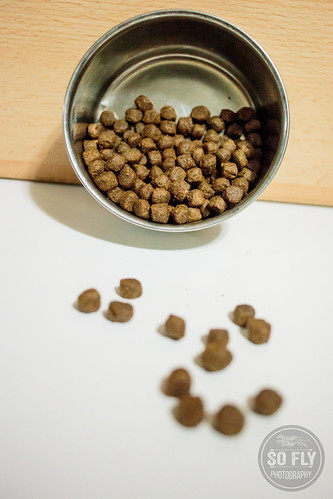
Ptera's one cup per day's worth of food
Ptera's biggest issue switching foods that I have noticed since bringing her home isn't anything digestion-related. Her eyes get much more weepy on some foods, or when adjusting to a new food. We did experience an increase in tears for the first couple weeks on PEAK, just as we tend to see every time her food gets switched in a major way (eating rotational diet doesn't cause issues if the different components of the diet are the same or if a major portion of the diet remains familiar.) I did introduce this food to her more gradually to see if that would help, and it did a little, but really, she just needs to eat something for a while, and the tears either go away after a few weeks, or persist. With PEAK, she is still a little teary, but greatly improved from the first couple of weeks, and honestly she is always a bit of a teary dog. Or else I just notice more with her since she has a white face.
I have noticed in the past few weeks that Ptera is looking much more muscular. A good part of that is likely her age, since she is coming up on 1.5 years old and that is when most dogs will start to really fill out their muscling. But I don't think the food hurts at all, even if it isn't directly related. Ptera's coat also looks amazing right now. She is shiny, and soft, and hasn't been shedding nearly as much since starting this food.
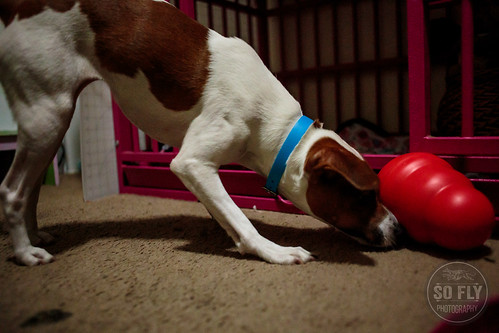
Working for PEAK in her Kong Wobbler, and you can see her great muscles
Ptera also ran at the flyball tournament two weeks ago while on PEAK and put down some amazing times (I need to brag about the tournament still). She is improving with each tournament, and a big part of what I pay attention to to help make that happen is training, food, and exercise.
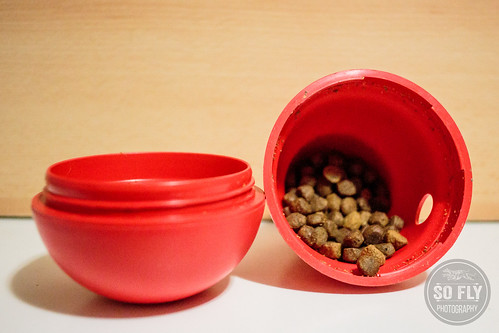
PEAK in the Kong Wobbler, mixed with a different kibble at the beginning of the month
Overall, so far, I am very please with PEAK and how it is working for the dogs. I was a little worried at first with Ptera's tears, but I am glad that I kept feeding the food since the tears have mostly cleared up now that she is used to the new food.
I will give another update in about another week, and let you know my final thoughts on the food!
I wear a FitBit daily, and I love the feedback it gives me. I enjoy doing challenges with friends to see who can get the most steps in a day, a weekend, or during the workweek. I also find some of my own trends pretty funny. (I paid for my own FitBit, and get absolutely nothing by talking about it on my blog.)
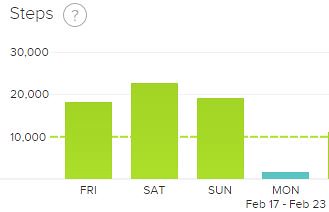
This past weekend, one of the flyball clubs I belong to (I am a member of two clubs) hosted a tournament. My other club ran two teams on Saturday, and one on Sunday. I helped with set up on Friday, ran Koira and Ptera both on Saturday on two different teams, and then worked a tournament job on Sunday. This is my FitBit chart for Fri-Mon.
Can you guess what I did on Monday?
I will just say that I hurt a lot by Sunday evening. I was actually in two Weekend Warrior challenges. I won one of them, came in third on the other. Had Friday counted, I would have won both of them hands down. Had Monday counted, I would have crashed and burned on both!
I took Monday as a total rest day, and was back at it on Tuesday for my weekly flyball class that I teach, as well as working my regular job. It has been a busy week, and feels all the busier for how much I did over the weekend.
Are you a total "weekend warrior" or do you manage to balance your exercise out better than this? Most of my weeks aren't quite this bad, but I do tend to do a lot on my days off, and not much on days I have to work.
Disclaimer: We were given this kibble to try in exchange for our honest review. We were not compensated in any other way. Links in this blog are not affiliate links, and we get nothing by you clicking on them.
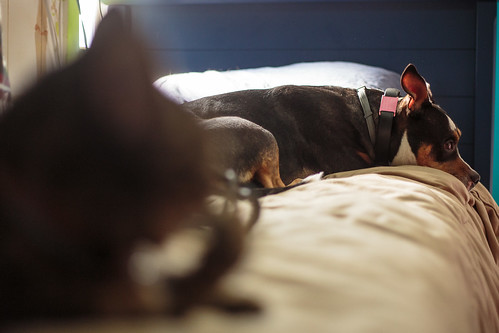
Koira chilling on the bed with Theodore Trex cleaning a paw in the foreground
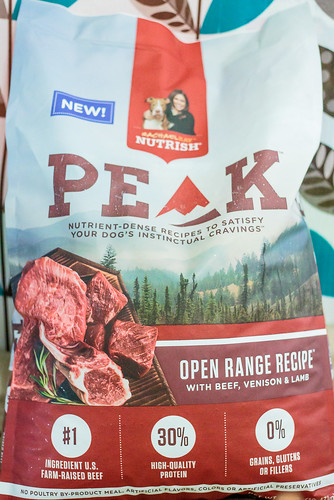
This month, Chewy.com offered us the opportunity to do a month-long review of Rachael Ray's new dog food, Peak. After checking out the ingredients to make sure it is something I am comfortable feeding my dogs, I enthusiastically agreed. I firmly believe that variety is the spice of life, and that that applies to dog food as much as to anything else. I like to switch up what food my dogs eat both to give them different tastes and textures to experience and to make sure they are getting a good long term balance of nutrients. Plus, it gives me the opportunity to take advantage of sales when available for the various foods that we feed.
Peak is currently available in two flavors, Open Range (beef/venison/lamb) and Woodlands (turkey/duck/quail). We chose to try out the Open Range recipe, mostly because I tend towards red meats for my dogs when the option is there. In raw feeding, red meat is important, so I have the tendency to bring that mindset to choosing a kibble as well. The two flavors are the same price for Peak so that doesn't factor into it, though with some other kibbles I've noticed that beef, pork, and lamb tend to cost less than the poultry options.
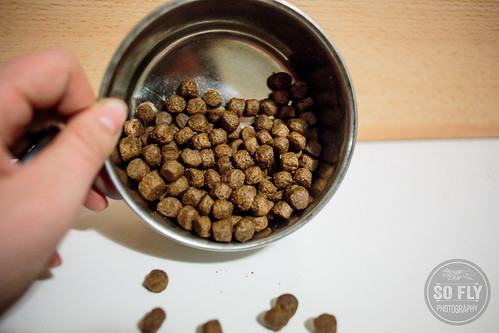
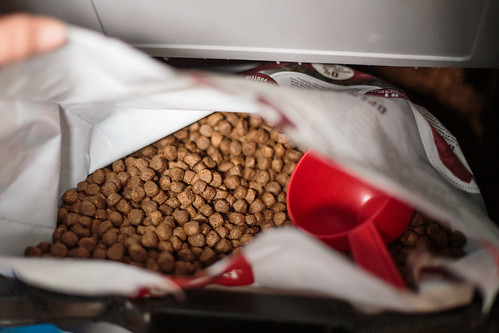
Peak kibbles with a one-cup red scoop in the bag
Our first impressions on opening up the Peak bag were overall good. The kibble has a light smell, not at all overwhelming. It doesn't smell greasy or rancid (some foods seem to smell rancid even if they are within date- I obviously avoid any food that smells like that). The kibble size is pretty standard for a higher end food- not tiny, not huge.
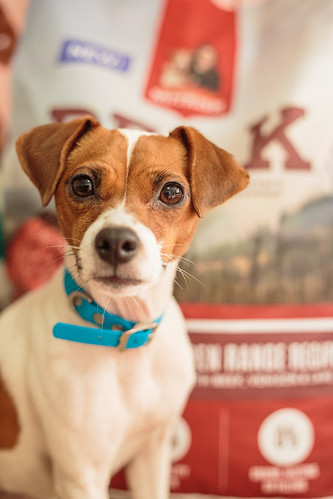
Trying Peak for the first time, Ptera was excited and interested. She is such a food hound, though, there are few foods she isn't like that with (such a difference from when I first brought her home!). She was willing to work for the kibbles by themselves, or using a food toy to eat. At 10 lbs, she is likely on the smaller end of dogs who would be comfortable eating this food just due to the kibble size. She has to crunch up each kibble, but is able to eat it easily enough. Some smaller dogs may not care for it, though, if they have trouble with medium kibble sizes. Other 10 lb or so dogs would likely do fine.
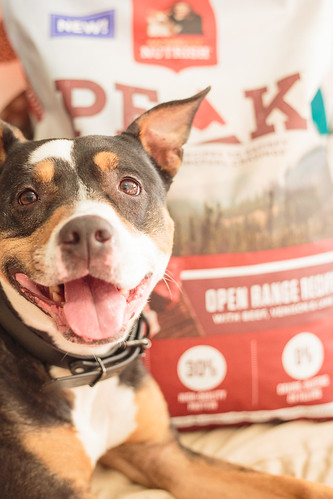
Koira was also enthusiastic on trying Peak for the first time. She happily worked through a food toy for it, and did tricks in exchange for single kibbles. At 40 lbs, the kibble size is a non-factor for her.
We've just started out trying the Peak, so these really are our first thoughts on it. So far, so good. We'll update again after a few weeks, and again at the end of our month-long trial.
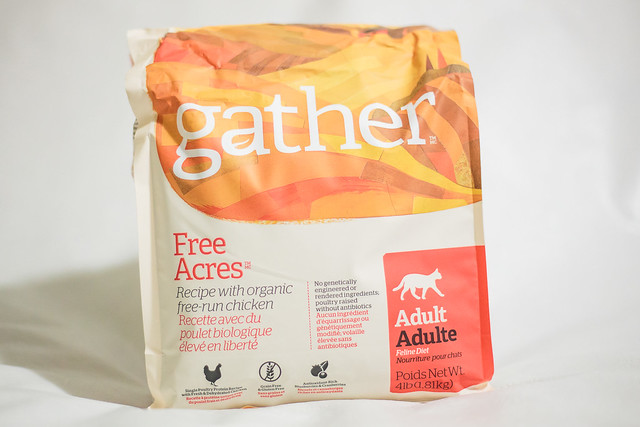
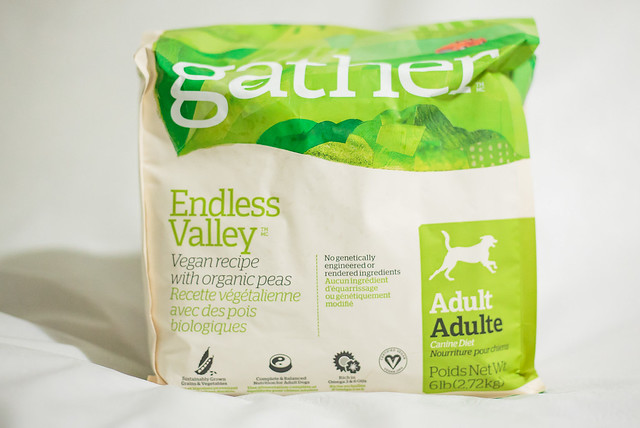
I recently had an opportunity to try out Petcurean's new line of food, Gather.
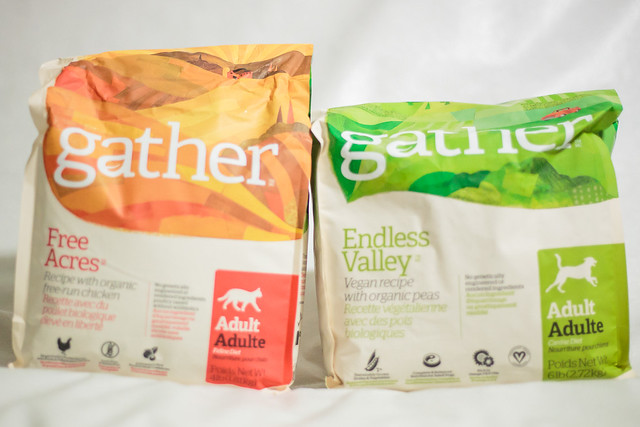
I tried out one of their cat products, and one of their dog products.
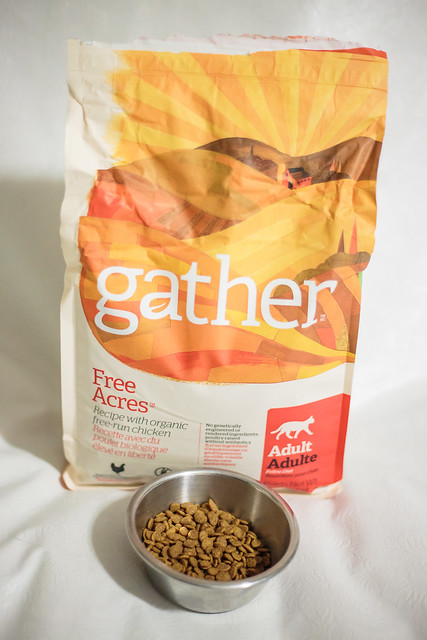
The cat food that we tried was the chicken flavor, and uses organic, free range chicken. It is also completely grain free.
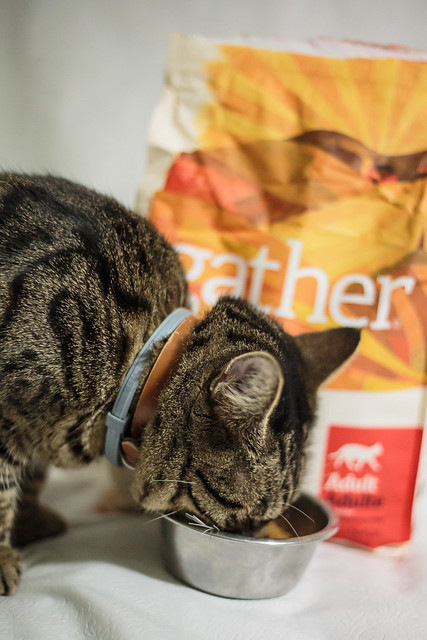
Theodore got pretty excited when he heard food hit his bowl. This is his first try of the food. I can safely say that he was a fan. He is a bit of a food hound, for a cat, but can be a bit picky when it comes to kibble foods.
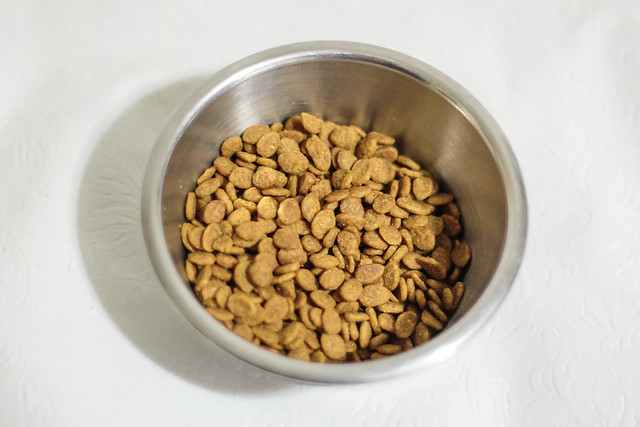
The kibble pieces in this cat food are teeny tiny, and are flat. Theo actually ended up having a little bit of trouble eating the last few kibbles in his bowl each time because of the shape. The flat pieces seemed to stick to the bottom of the bowl a bit. But that didn't phase him at all.
Even after over a week of eating Gather cat food, Theo was still a fan, and still quickly cleaned his bowl (except for the couple of pieces that got stuck to the spit on the bottom of the bowl, anyway). I think time really is the test for cats and food, because they have to eat it long enough for the novelty to wear off, at least a few meals.
I was really happy with him on this food.
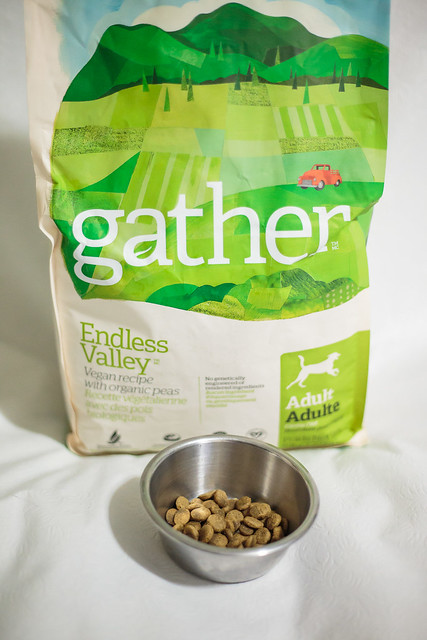
The dog food that we tried was actually the vegan flavor of Gather, called Endless Valley.
Anyone who has followed my blog for long knows that I have fed raw for years, both alone, and as a part of a rotational diet. So that part of me is somewhat opposed to a vegan dog food. However, I can see a distinct need for something like this. Years ago, while trying to figure out Koira's allergies, I put her on a number of different foods, trying to figure out what she was allergic to. This food would be a great option for that. It would eliminate all animal proteins, and give something to feed regularly while the allergy situation is figured out, slowly adding back in different ingredients.
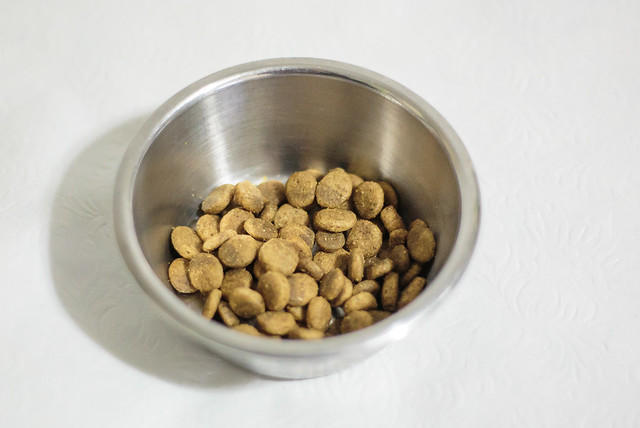
It has just the slightest green tinge, but otherwise, without reading the bag, I don't think anyone would know this was vegan. I tried it out with about 10 different dogs as treats, and not one dog refused it, even with a few dogs being pretty picky.
With this food being from a great company like Petcurean, I have to believe that it is the best possible option if, for some reason, your dog has to be on a vegan diet for allergies. That said, I do have an issue with humans forcing their pets to eat vegan just because of idealogical nonsense.
Overall, I was happy with both of these foods. I likely wouldn't feed the Gather Endless Valley vegan food for long, simply because there is no reason to with my dogs. But I like knowing that it is out there, because I know how hard it can be to do elimination diets with dogs while getting them the right nutrition the entire time.
I've had a few questions lately about what I mean when I say I feed a "rotational diet" to my dogs. A lot of people feed rotational diets, and it doesn't always mean the same thing to all of us.
The basics are the same. Feeding a variety of different foods on a rotational basis is a rotational diet. (I've now used the word rotational so many times that I feel like it has lost all meaning to me- ever have that happen to you? I'm just going to say RD from now on, I think.) Exactly what is fed as part of an RD is what varies the most, person to person, dog to dog.
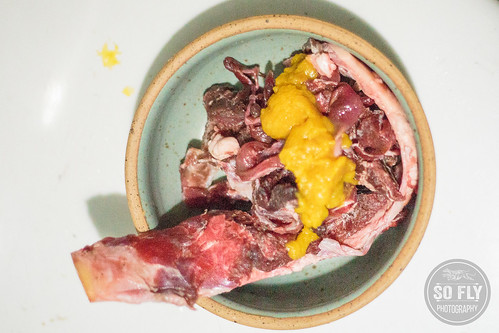
The big thing sticking out to the side is a tendon
I think most people who feed an RD rotate between flavors of kibble in the same brand (for example a fish formula and a beef formula by the same manufacturer), or else they rotate between flavors and brands both. I do those things, but I also add raw food into the RD I feed to my dogs.
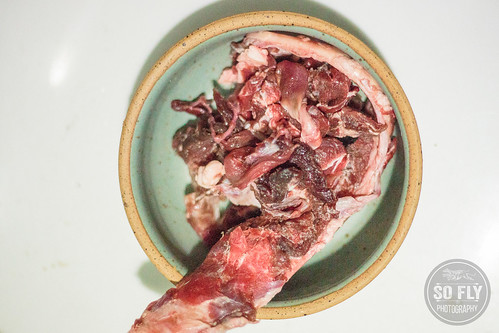
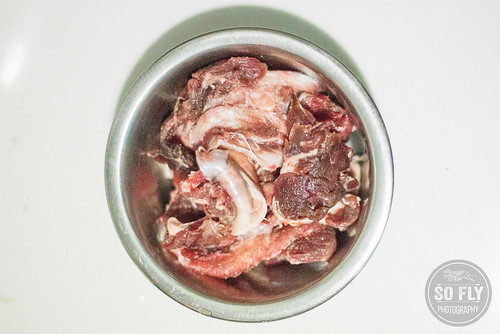
Lots of meat and connecting tissues
I tend to buy meat on sale, get old freezer burned meat for free or dirt cheap, or get butchering scraps. This particular meat is butchering scraps from an elk. Humans may not like to eat the tendons and connective tissues that come with meat, but it is great nutrition for the dogs, who don't mind the texture and have jaws meant to deal with it. And of course, along with the silverskin (connective tissue from between muscles) comes some amazing wild game meat that the dogs absolutely love and that cannot be replicated with domestic animals.
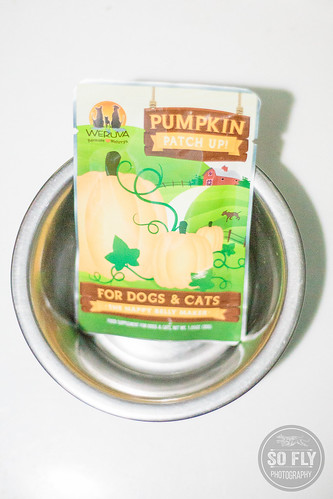
Individually packaged pumpkin
So I rotate between a number of kibbles that work well for my dogs, some dehydrated foods, and raw. Since my dogs get such a wide variety, they rarely have any issues switching cold turkey from one to the other. And even when they do have an issue, it tends to be mild enough that a day or two of adding pumpkin to their food solidifies everything up.
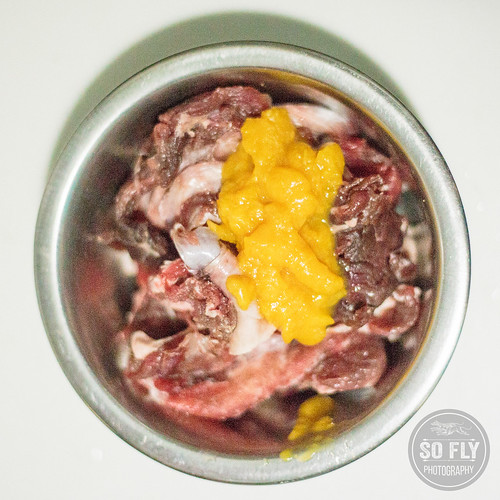
Ptera's meal, with Weruva pumpkin on top
Ptera has had a venison based kibble before, and has had raw, but has not had raw elk. Wild game meats like elk and venison can be very different from domestically raised meat, lean and rich and with a different flavor and balance of nutrients. Since it is something new, I like to add a bit of pumpkin to the food to make sure we don't have any problems.
In the past, I've opened a whole can of pumpkin puree, used a few tablespoons a day for a day or three, and then had the rest of the can get moldy in my refrigerator. Or, occasionally, I'll remember to freeze the rest of the can in an ice cube tray and then lose the pumpkin ice cubes at the bottom of the freezer somewhere, to be found the next time I clean it out to the bottom. (I am not the most organized person in the world. Like, at all.)
Koira's meal, with Weruva pumpkin on top
Weruva Pumpkin Patch Up is 100% pumpkin puree, just like the cans, but in sized out pouches. They come as either 1 oz or 2.8 oz serving sizes. I got the 1 oz option for my dogs, because as much bigger as Koira is than Ptera, she is still a pretty small dog by most standards. One pouch is roughly the same as what I would use if I opened up a can. And while the pouches do cost more than buying a can, they are much more convenient, and won't go bad if they don't get used up in a few days (meaning that over time, if you use a few tablespoons from a can and throw the rest away, it doesn't take long for these pouches to be a better deal). And they would be great for traveling, when dogs often get nervous or excited to the point of digestive upset, and pumpkin can be a lifesaver. Way easier to have a few pouches than to worry about carrying a can with you, a can opener, a spoon to dish it out, and a way to store the opened can.
In terms of a rotational diet, I am likely not the norm, since I do add in raw food on a regular basis as well as feeding a variety of kibbles. The meat I feed varies a lot, though it is always pure meat with no added salt or flavorings (the dogs don't get bacon or ham, etc). But I try to be pretty calm about what my dogs eat overall. Outside of a very few foods, I don't worry much about if they eat a treat or a piece of food on the floor, because a tiny bit is unlikely to hurt them, and their stomachs are used to processing a variety of things. I try to feed high quality foods (which to me is a food where the majority of the protein comes from meat sources as whole meat or meal, but not by-products or generic "meat" rather than a named source, and produced in the US or Canada), and rotate what they eat both for variety and to make sure they are getting a well balanced diet over time.
Anyone else feed a rotational diet? If so, what does that mean to you for your pets?
Disclaimer: I was provided with Weruva Pumpkin Patch Up in exchange for an honest review. I was not compensated in any other way, and this review is entirely honest and in my own words.
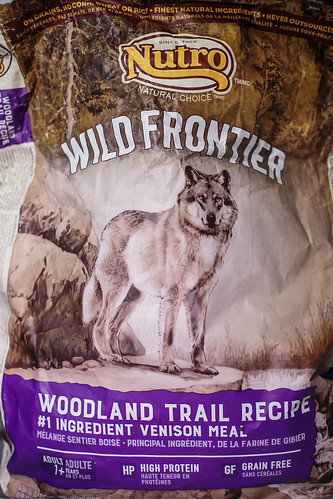
For the month of September, both Koira and Ptera ate Nutro Wild Frontier's Woodland Trail recipe. Both of them enjoyed the food a lot, and stayed eager to eat every day at mealtime (and in between, because they are food hounds).
Super crinkly bag at the end of the month
I noticed after the first few weeks that Ptera was extra silky soft. Though she looks short hair, and is, she has more hair and sheds more than Koira. And I didn't notice any particular difference in the amount she shed. But she did feel very nice, with a silky coat and clean skin. Koira didn't have as much of a difference. She's been trying to get over the vicious cycle of a bug bite that cause itching which made her scratch to the point of losing fur by her tail, back in August. I do think her hair is starting to come back, but she notoriously stays bald for a long time when stuff like that happens. Her fur that she does have, though, appears healthy and shiny, and her skin outside of the itchy area we are working on is clean and clear.
Throughout the entire month of feeding Nutro, the dogs had consistent bowel movements. No excessively soft stools, or overly large ones.
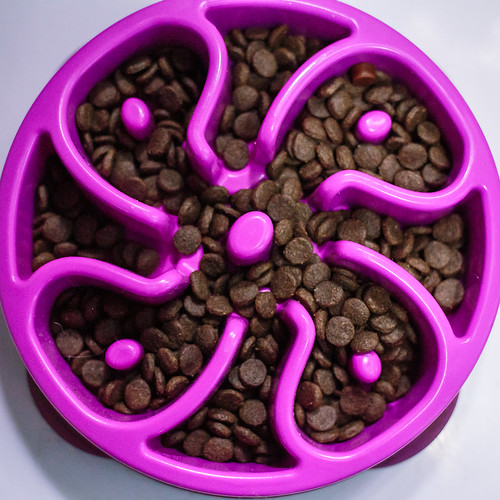
Ptera's food for a day, in a slow feed bowl
Overall, I felt like this is one of the best quality kibbles I've fed to my dogs, and I plan on keeping it as part of their normal rotational diet. It can be hard to find foods that work as well as this one for multiple dogs, and of course, there may be dogs who don't do great on this food. But both of mine love it, and do really well on it.
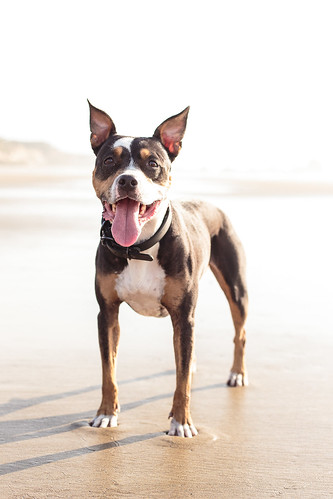
Happy, healthy dog
We were provided with this food in exchange for our honest review. We were not compensated in any other way, and all opinions are 100% our own true experience.
An essential part of any dog sport or training is making sure that your dog stays well hydrated. Some people are lucky, and have dogs who will readily drink water when offered. Others are not so lucky. Koira, for example, won't drink water when traveling until she is really thirsty, and even then, she doesn't drink much. Obviously this isn't super healthy for her.
Over the years, I've developed a bit of a system to help get Koira to drink. First, at flyball practice, I have trained a cue for drinking water, and reward her with her tug toy when she drinks. Unfortunately she often does fake little drinks in hopes for her toy. But it is better than nothing, and unless it is a really hot day, it isn't the end of the world if she waits until we get home before she really drinks.
At tournaments, or other full day or full weekend dog events, it is a bigger deal. She needs to stay well hydrated to run well and stay healthy, whether she wants to drink water or not. So I put add ins into her water to entice her into drinking. At need, I will use standard treats or kibble, but what works best is dehydrated raw food added to the water. I've used all kinds- if it is dehydrated raw and on the market, chances are I've used some of it for her at some point. I add just a little bit of the raw to the water, just enough to give it an enticing flavor and scent. I figure the little boost of protein during a full active day can't hurt anything either. The powdered ones work best, the ones that will actually mix into the water instead of floating on top or sinking into the bottom.
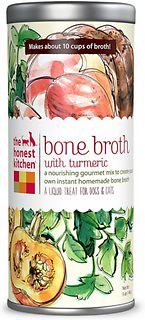
Honest Kitchen has started making a powdered bone broth that I've been debating trying. Luckily for me, Chewy.com offered me the chance to review it this month.
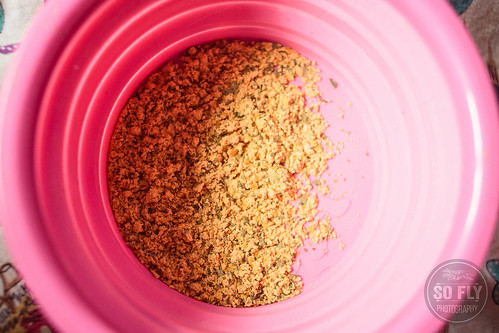
The Honest Kitchen Bone Broth has just four ingredients- beef bone broth, parsley, pumpkin, and turmeric extract. The powder smells pretty strongly of turmeric when you open it- I didn't think it smelled meaty at all. The instructions say to mix a tablespoon of the powder with a cup of hot water, mix, and then let sit until cool enough to drink.
Tablespoon of bone broth powder
Well, that was kind of a bummer for me, actually. Because what I would use this most for is to get Koira to drink water at tournaments and trials and events. And I won't have access to warm/boiling water at most of those, and won't want to wait around for it to cool off even if I do, because generally I want her to be drinking the water now, not ten minutes from now. That said, I haven't tried using cold water and just shaking, so it might work. I generally do the dehydrated raw by putting the raw in the bottom of the bowl, then pouring the water over the top out of my water bottle. So I will have to try that with this bone broth and see how it works.
Plus side, both Koira and Ptera seemed to really like this. We did test it at home, so I can't say for sure that it would entice Koira to drink while away from home, but she seemed to really like it, so I think it probably would work.
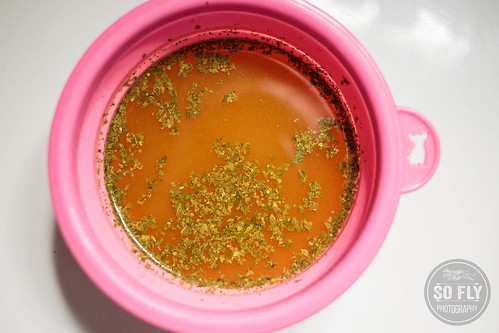
Bone broth powder mixed with hot water
I did notice that unfortunately, the turmeric appears to have stained the inside of my silicone bowl with just the one use. That isn't a big deal when talking about a drink for a dog, but it is good to note so that you don't spill this stuff on yourself or use a nice bottle or bowl to put it in.
Overall, I think the dogs enjoyed the bone broth. I don't know that I would give it every day unless I fed out of a bowl and just mixed it in with the kibble/dehydrated raw. But most of the time my dogs are eating out of food puzzles, which makes it not practical to add liquid or a powder to their food. *Chewy.com provided me with this product free of charge in exchange for my honest review. All opinions here are entirely my own, and I was not compensated in any other way. What do you do to make sure your dogs stay hydrated while traveling, competing, and training?
Bonus- here is a video of Ptera passing with one of the Apupalyptic dogs in training Arlo. Arlo is solid as a rock, but I think Ptera is doing pretty good too!
Ptera has officially been here for a week. And she has learned so much in that time! Mostly we have been working on the basics- potty training, crate training, and recall. Well, the weather cleared up yesterday, giving us a chance to take a hike up Bald Hill, and it was a great opportunity to get in some recall practice for Ptera.
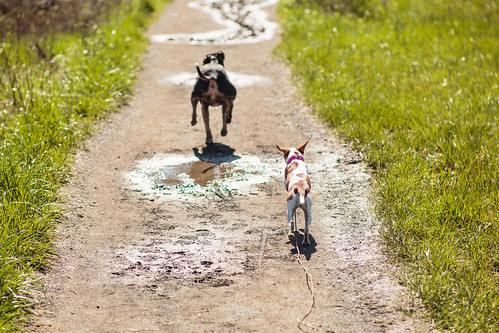
Getting some running in down the trail
I've been spending a lot of time on our walks saying Ptera's name and giving her a treat when she responds- and only saying her name if I m 99% positive she will respond. So for our hike, I put her on a drag line (a 10 foot long lightweight cord with a knot in the end) and practiced off leash recalls from a much greater distance.
Lets just say I am really happy with where we are with her recall right now!
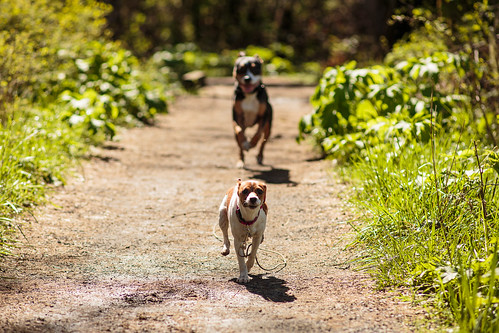
Both dogs coming back when called
Something else Ptera needs work on, which isn't really a training thing, is building muscle. I don't think she really did much other than hang out in the house at her former home, and her total lack of muscle supports that theory. So I have been working on getting her active and moving with an end goal of building muscle and endurance.
The adorable seriousness of a recall
Ptera is only 6 months old right now, so I don't want to overdo things with her. At the same time, though, her bones and muscles and tendons need to move and be worked and have her do stuff for them to develop properly. So we have been going on lots of walks. I want to build her endurance without overdoing it- I don't want to build up to where she needs a 10 mile walk to chill out! But I do want her fit to the point where she can run flyball all weekend successfully by the time she is competing (dogs must be 1 year old to compete in flyball, and she likely won't compete right when she hits her birthday, because there really isn't any rush).
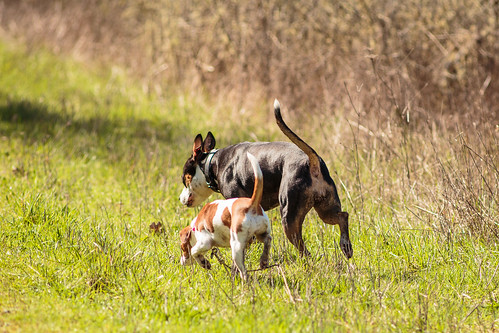
Exploring the woods- I don't think she's ever been on a hike before
Leash walks on local streets, down to the local park, and just around town in general are helping build her leash skills (she wasn't leash trained as of last Friday when I picked her up). They are also helping with building confidence, exposing her to new things in a way that I make sure is positive, and of course, helping build some muscle and fitness.
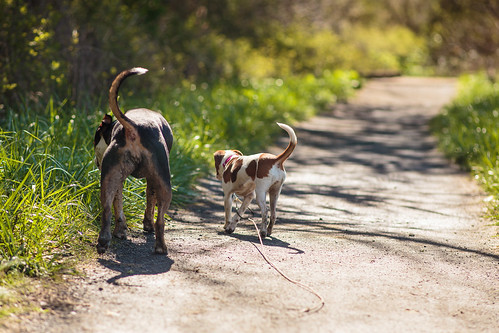
Koira and her mini me
But really, I prefer to hike my dogs off leash whenever possible. I feel like they just get so much more out of it if they are able to be off leash, smell the smells, check things out, jump over logs, and generally just explore, so long as they are within sight and listening to me if I call them. For that, recall is absolutely required. But I think we're getting it. I'm not ready to take Ptera's drag line off yet, but for a dog I've only had for a week, I am so beyond pleased with where she is in her recall training right now.
Last week I mentioned that Koira ended up a bit limpy after our first day of playing disc in the nice weather, and I thought today I would write about how I react to a limping dog. I want to be clear from the start though- I am not a vet. This is just my personal experience dealing with my own dogs. I am not telling you what to do with your dog. If you are worried about your dog, take them to a vet.
The most important thing to realize of course is that dogs limp for a variety of reasons, just like humans. Injury, discomfort, soreness, stiffness, or something sharp on the bottom of the foot tend to be the big ones.
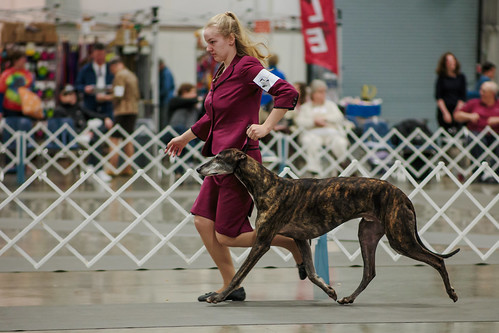
A greyhound at last weekend's show. You can see the triangles formed front and back as they should be in the trot. In motion, you would see that the right side would be mirrored by the left side in a second with the next step, back and forth, evenly.
First, you have to be able to tell if your dog is limping. Sometimes it is obvious, such as when the dog is no longer weight bearing on a certain leg- that gives you an obvious indication of which leg is the problem. If the limp is more minor, though, the easiest way to pinpoint which leg is the problem is to watch the dog from the side while they trot past you. The trot is a gait that should be completely even. A dog with a good build will form matching triangles with their front and rear while at the trot. If a dog is limping, trotting will show the injury the most clearly because one of the legs will not be quite in sync with the rest. Depending on the severity of the limp, the dog may also bob their head while trotting as a means of compensating for the leg they don't want to/can't use fully. All of this is much easier to see from the side than from above, so if possible, have someone else gait your dog while you watch from the side.
You can see in this video how hard it is to see the dog's gait when you are looking from above. If you don't have anyone available to trot your dog for you, try to get directly behind them and watch for even movement of the hips and shoulders at the trot.
Once you determine if your dog is, in fact, limping, you can decide what to do. And that depends on a number of things. First, when did your dog start limping?
If you were walking along on a path and your dog suddenly starts having a dramatic limp, my experience shows that it is most likely a thorn or something in the foot. I will stop and carefully check over the toes, bottom of the foot pads, and in between the footpads, and remove any thorns that I can see. If I can't see anything, I will check everything over again, rubbing my finger across the foot pads and between the pads. Generally, that fixes the problem. If it doesn't, I will walk a few feet, because sometimes the dog will limp in anticipation of the foot hurting and it takes a few strides for them to stop limping.
If you are in the middle of playing an active game like fetch and your dog suddenly stops and comes back limping, it is time to end the game regardless for the reason for the limp. Most of the time, it seems to be a pulled muscle (which is more likely to happen in a dog who is tired because they are misstepping and misjudging). However, a sudden onset limp during exercise can be a more serious injury like a torn CCL (the tendon in the dog's knee). My first order of business if this situation occurs is to stop the game and see if I can determine exactly what the problem is. I will check feet to eliminate a cut or a thorn, then go up the leg gently bending each joint. If the dog reacts by pulling away, flinching, or the joint doesn't easily bend as far as normal, I know where the injury is. If the leg that appears to be limping doesn't have an obvious reaction from the dog, I will carefully feel along the spine from neck to base of tail, as a neck or spine issue can cause limping. I don't spend a super long time doing this, it is more of a quick field assessment to gain information on what to do next. If the dog is willing and able to walk, I will use the walk back to the car to carefully watch the dog- is the limp getting worse or better during the walk? Sometimes a short walk back to the car is enough to clear up the limp completely, in which case I assume that the dog tweaked something or stubbed a toe in such a way that it hurt really bad at first, but fades to feeling just fine pretty quickly.
Yelling at the camera
Different from the abrupt stop during strenuous exercise is the small limp that becomes evident only afterwards. I will check over the dog in the same way, but generally, this type of limp seems to be from doing too much. The dog gets tired, and the weakest point starts hurting. We never had this happen, actually, until Koira got older. Once she had a few more serious injuries in the past, I started seeing the limp-after-exercise occur, always on the same leg where she has previous shoulder and elbow injuries. Doing too much makes those old injuries flare up a little causing a limp. If my general check over doesn't reveal anything other than the old injury being a bit sore, we will end the game and head home, but I don't tend to be super worried about it. I have old injuries that get irritated when I do too much too.
Taking a break from disc to do some core work with a sit pretty at the park
The other limp we have seen more recently is a limp at the very beginning of our walk. It might start out kind of bad, but movement makes it more minor, and with continued walking, the limp goes away. This is basically stiffness that needs to be worked out. It might be from arthritis and joints that don't want to start moving, or it might be soreness from doing a lot the day before and all the muscles are complaining, but nothing is actually injured. I feel like this after a day of serious hiking, and even though I feel like all I want to do is lay in bed, I know that the way to feel better is to get up, move around, and limber up. If Koira has a limp that she didn't have the day before, I will stay close to home while we walk a little more. If the limp seems to be getting better rather than worse or staying the same, I assume it is stiffness/soreness, rather than an actual injury.
Tired dogs are happy dogs, as long as they aren't run into the ground. Over exercising can cause injuries. Use a combination of physical exercise and mental stimulation to tire out your dog to prevent injury.
So what do I do with each of these situations? In the first, removing the thorn tends to fix the problem. If Koira still has a bit of a limp when we get home, I will check paws again and apply antibacterial ointment with pain killer, since some thorns can hurt for a long time even after they are removed. In the second, I head home and restrict the dog to leash walking. If the limp doesn't seem to be getting better after 2-3 days of restricted activity, or if it seems to be getting worse, I will contact the vet. Or, if the limp is severe to begin with, I may contact the vet right away. It depends on how bad it looks. The limping-after-exercise situation I will again restrict the dog to leash walks only. I may give some Vetprofen as well, which our vet has prescribed specifically for days and weekends when Koira has a lot of activity. It is much the same as me taking some Ibuprofen before and after heavy activity. And the last situation, with a soreness/stiffness limp, I will lower the activity level a little for a few days, but make sure to stay active with plenty of leash walks to help stay limber. Again, I might give some Vetprofen to reduce inflammation. In any one of these situations if the limp persists or gets worse, I will talk to my vet. Sometimes we will make an appointment to have a chiropractic adjustment done, or to have a massage done.
Chilaxing.
To be prepared, you should make sure that your dog is okay with being handled. Go over them regularly as if you are checking for a limp, gently flexing at the wrist, elbow, shoulder, hock, and knee. You need to be familiar with handling your dog so you know what the various parts of your dog feel like. Koira has less range of motion in her right shoulder and elbow, for example, so I know that just because the rom is lower there doesn't mean that that is where she is hurting. Also, you want to know that if your dog resists the movement or tries to pull away, it is because of pain, not because they are unused to being handled. But, as always, you can and should go to the vet if you are unsure. That is what they are for. My vet likely thinks I am paranoid because my dog has gone in so many times for limps that only I can see (Koira gets excited there, which often causes limps to disappear while there). But as long as my dog is healthy, I'm okay with it.
The best way to prevent injury is to make sure your dog is in shape. They shouldn't be overweight. They should be well conditioned. You should keep an eye on and know how conditioned your dog is (is it winter, and you've been less active, or summer, and you've had all season to condition) and make sure to restrict activity to a point that your dog can do safely. It can be hard when the sun comes out in the winter to not go hog wild to enjoy every bit of sun. Regular activity and slowly introducing new activities is essential to keeping dogs healthy. As dogs age, joint supplements can be great for helping keep them limber (Koira is on Glycoflex Plus). If your dog is older, ask your vet about keeping a medication like Vetprofen on hand for as-needed inflammation reduction. Check out your area and see if there are classes taught by certified FitPaws Master Trainers or Certified Canine Fitness Trainers, as they can help pinpoint the areas your dog needs improvement in and show you how to make those improvements. A canine chiropractor or massage therapist might be a great resource to have as well, since active dogs often benefit from those treatments even if they aren't showing any pain. Above all, know your dog.
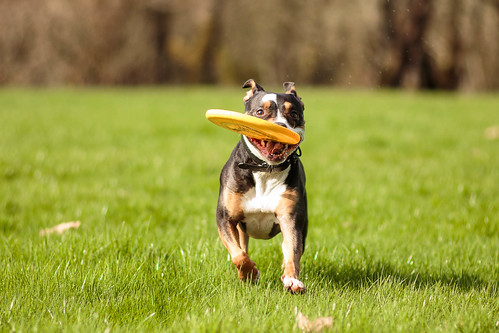
Koira loves playing disc. She goes totally bonkers for it. But wet, soggy, slippery ground is too dangerous to play on for a dog who will push through anything when motivated, so we haven't played in quite a while. Luckily for her, the sun came out for the past week and dried everything up enough that we could play disc a bit at the park this week.
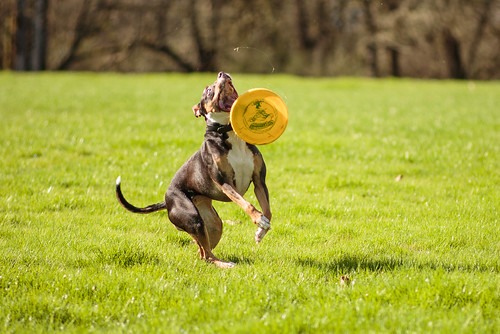
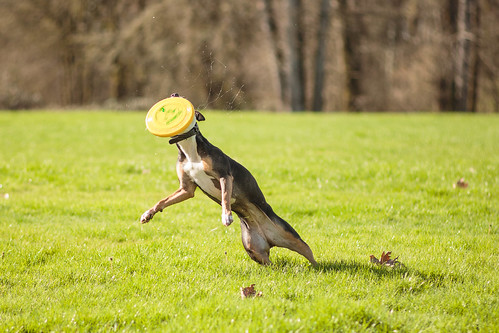
She bounced this one off her nose and then scrambled to grab it again.
I knew we hadn't played in a while, and even though we have tried to stay active this winter, it isn't the same as what she does while playing disc. There are some things you can, and should, do to help keep your dog safe while playing disc.
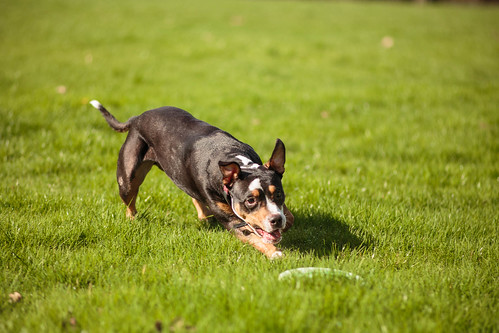
Early drop throw, it hit the ground before she got to it.
To try to keep the session as safe as possible, I did a few things. One, I worked a few years ago on improving my throws without Koira there. Throwing consistent and safe throws is essential to keeping your dog safe while playing this game. I have heard of more torn ACLs from bad catches/landings playing disc than any one other incident. The best throws for dogs are long and low with a good bit of lift, so the disc isn't traveling super fast and isn't diving straight into the ground. Dangerous throws are the ones that go high and cut to the side or drop abruptly, causing the dog to change directions suddenly or leap in ways where they can't land properly. And some dogs do really bad with "floaters" which are throws where the disc is super slow and lets the dog outrun and get underneath it. It is a delicate balance of having it slow and low enough, but not TOO slow and low. Everyone has bad throws sometimes, and you can't control a sudden gust of wind, but you can greatly improve your dog's safety in this game by practicing without your dog until you can pretty consistently get throws that are going to be safe to chase, catch, and land for your dog.
Since we hadn't played in a while, I also made sure to enforce breaks. We would do a few throws, and then do some downs, some posing for the camera, etc. In the middle of this disc session was when we did our photos for the Zukes Z-Bones we reviewed earlier this week. The short breathers helped keep her from getting tired and sloppy and increasing her risk of injury.
Something else I have been working on is getting rid of the crazy bonkers part of Koira's response to discs. It is great that she loves the game, but it is not great if she body slams, grabs discs while they are in my hand, goes after someone else's disc, etc. And those are things she always used to do. Luckily, keeping her from going after other people's discs was an easy fix, and was mostly just reinforcing her recall and leave it when she was excited. Now, we can go walk the paths through the disc golf course without her even looking at their discs. In fact, we had disc golfers playing through this field the entire time we were there, and she never once tried to go for their discs.
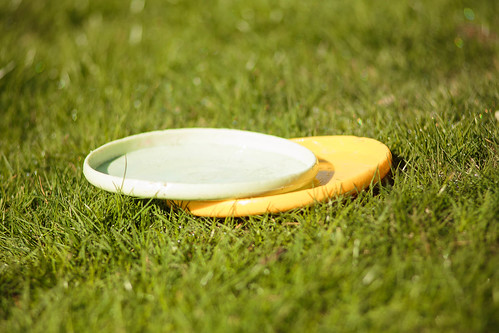
I've had these discs for something like 4-5 years and they have barely a dent in them. They are these Hero Discs.
As for the rest of it, we have been working on a lot of impulse control in various settings. Having her down before she gets to have a toy thrown, heeling while I hold a toy visible and within reach on that side (we do an off-side heel, so, on the right). She likes to lunge for the toy that is within reach, but we've managed, over time, to reduce that to almost nothing, though she will occasionally still try a snatch if she is really really up. Teaching her an off side heel gave her an alternative to body slamming or circling manically trying to get to the toy. I can now walk her to the park with a ball or disk or chuckit in my hand without issue.
Practicing down-stays as a means of taking a break between throws
The one thing that we still have problems with is her drop when she is excited. So we play with two discs, I throw one for her, and then have another one ready to throw when she gets back. When she naturally drops the first one, I give her the drop cue (out), and I have some hope that by reinforcing her dropping the disc by throwing the next one, it will help reinforce that cue even when she is in a high state of arousal.
Working on our down stays benefits in multiple ways. She takes a break so she doesn't get tired and sloppy going solid, she gets to work her brain a little and come out of hyper arousal states, and we get to take adorable pictures.
All of this said, we stayed at the park too long that day. When we finished up and headed home, Koira had a very slight limp going on. That night, she was pretty stiff. I have some vetprofen on hand for when we do a lot of activity and she needs a little bit of an anti inflammatory, mostly during flyball weekends. By the next day she was fine with no signs of a limp, but it reminded me that even if she acts young, she is 8, and she does have a lot of old injuries that can flare up and cause soreness. We took it easy the next day, and then did a shorter disc session, with more breaks for heeling and stay work and trick training in between throws, the day after that, and had no signs of soreness.