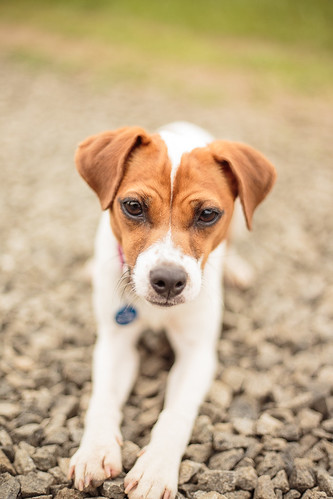
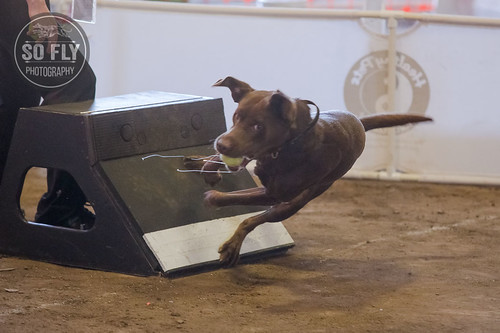
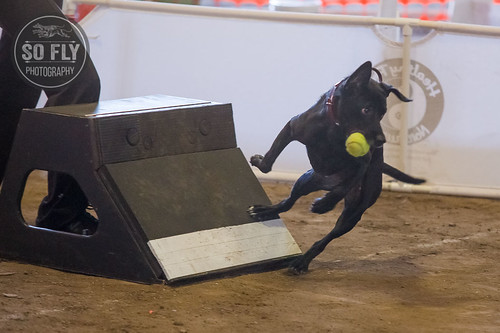
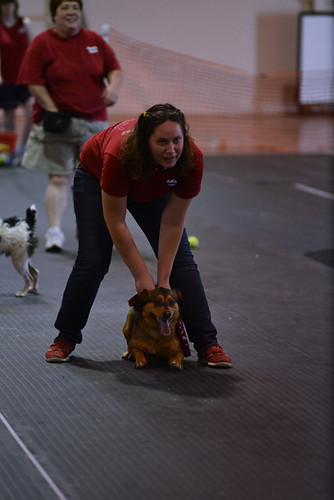
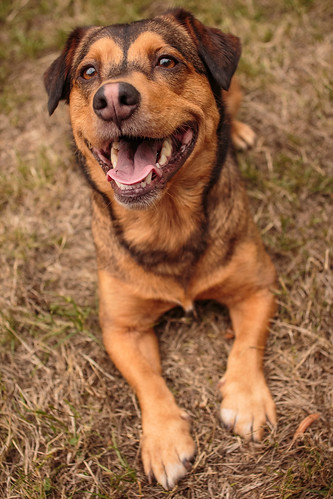
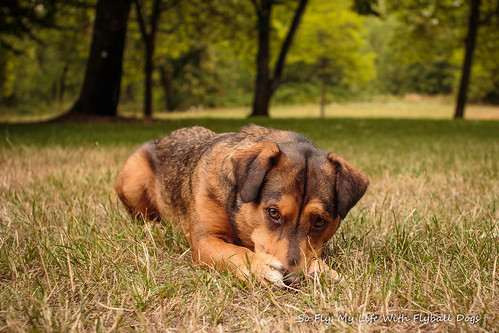
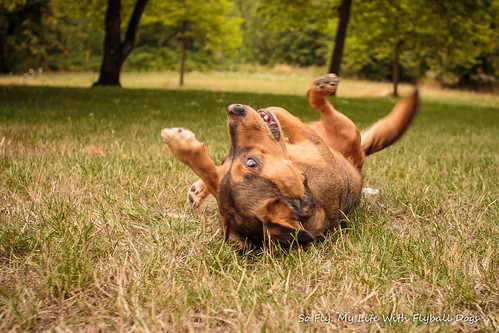
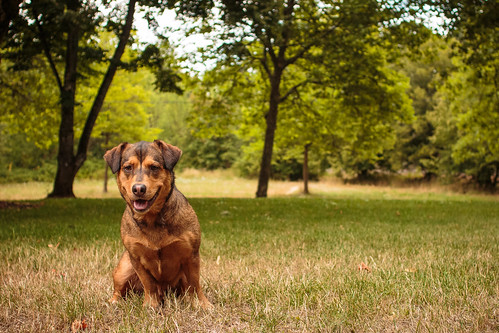
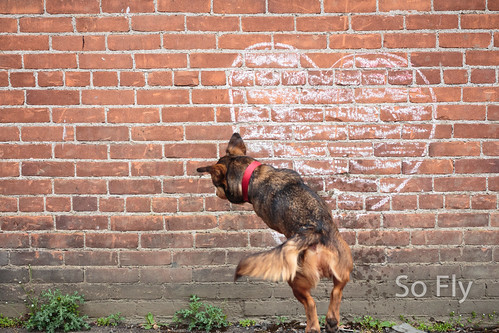
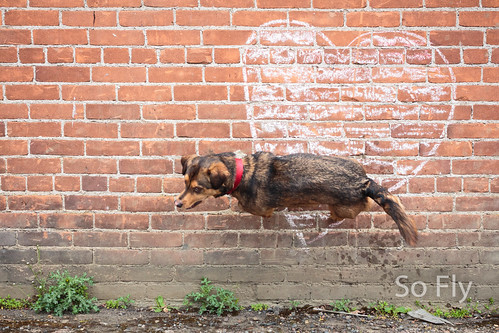
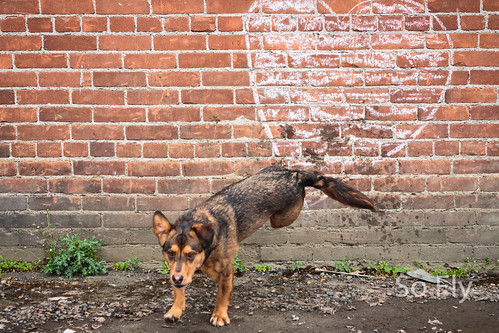
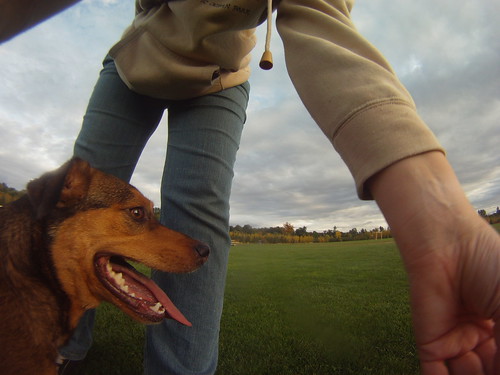
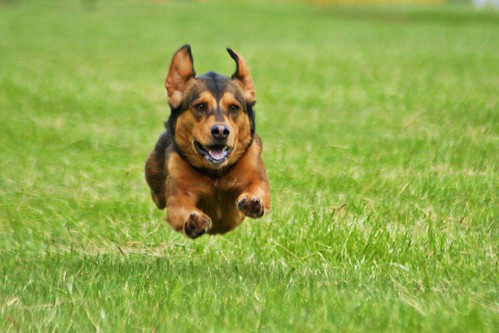
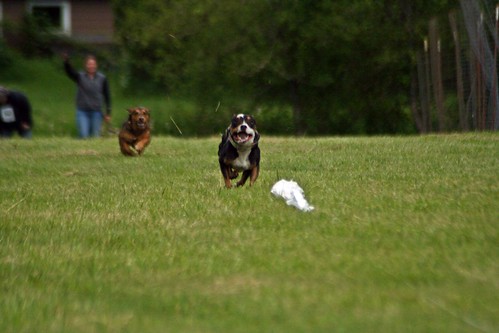
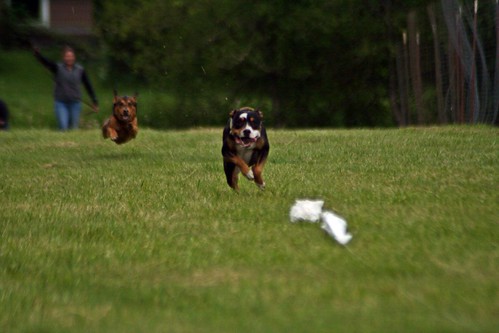
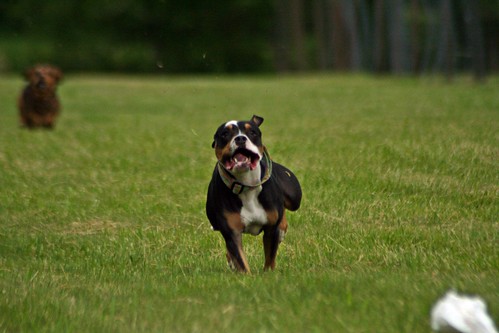
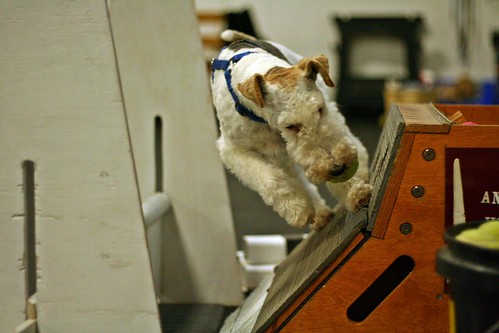
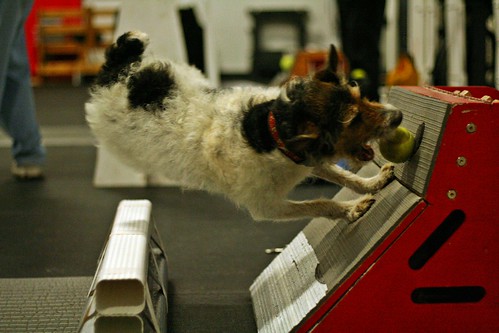
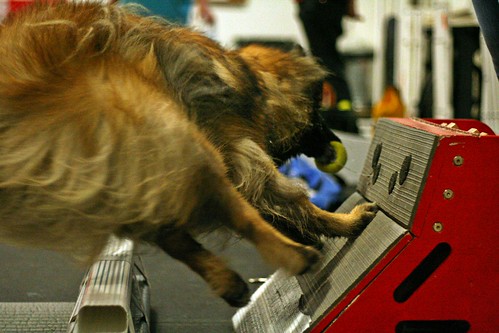
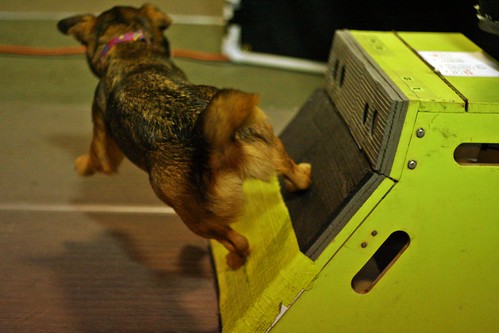
Happy Wordless Wednesday. How about a silly picture of Ptera, and then some videos of her flyball training so far?
Silly little puppy
I've been videoing Ptera's training sessions since bringing her home. She is a puppy, so we are taking it easy on the jumping, but she is a quick, eager to learn pup.
Here is our first ever session of over-and-backs:
And passing drills with a small dog:
....and with a big dog:
We also just introduced the wall board last week.
Lets just say that I'm thrilled with where we are right now. I'm not going to push her, and I want all of the basic concepts solid for her before we move on. But I'm happy with where we are, and am looking forward to the months to come.
And of course Koira is having a blast as well. She may be 8, but I have a feeling she has many years of flyball left to run.
I had a teammate take some video of Koira at practice on the 15th to show the progress of where we are now.
In the video, you can see that we are still doing a drill with her where I am up next to the box. For the first three heats, I reward her right next to the box. The last three, I take off running to reward her in the runback area. (Side tip: Don't try to outrun your dog. You can't.) Koira is still double stepping on the way toward the box in some of these runs. In some, though, single strides all the way. And even the ones that are double stepping are much faster than the double stepping was back in July. Overall, I'm pleased with the progress we've made.
This past weekend, I took a spur of the moment trip to Washington. Dogapalooza was happening at the Cowlitz County Fairgrounds as a fundraiser for the local humane society, and there was a flyball demo. I wasn't originally planning to go, but when a teammate said they were going and said they had room for me, I thought it would be a great way to spend the day.
I picked up Pallo early in the morning and met my teammate in Salem, then we drove together to Longview, WA, arriving at 10 am. There was a farmer's market across the street, which was a fun little diversion while we waited for the rest of the flyball people to arrive. And then the fun started.
First up, I took Pallo over to the "musical chairs" competition. Basically, a bunch of dogs were in a fenced area walking in a circle to music, and the last dog to sit when the music turned off was out. We lasted until the last half or so, but then Pallo decided sitting was stoopid. But, our teammate Chester ended up winning!
Then, we put together a bit of a flyball demo. I boxloaded for one of the three dog lineups. Most of our dogs did really well. They tend to somehow know when we do demos and pull lots of stupid stuff like running around jumps that they would never normally do, but there wasn't much of that. Even though Pallo is retired from flyball, I did bring him out to run in a singles race against Henry, an adorable little tailed corgi who looks a lot like Pallo. Henry had a few "moments" during the singles, but Pallo was his normal reliable self, only spinning on the last of four heats (he did the same in our afternoon demo too, I think 3 heats is his limit before a spin hits).
Then I brought out Koira to do some drills. While she is on Glycoflex Plus to help increase her range of motion and decrease arthritis related pain (check out my blog post last week about how you can try a month of Glycoflex for free), I also am doing some training to improve her confidence.
This drill is meant to increase Koira's drive to the box by placing the reward (me with a tug) at the box. The idea is that she will drive faster towards the box that way. I reward right after her box turn.
So far, it seems like this drill is really helping her. You can see in the video that she double strided in the first run, but then single strided in the others. I did cut out some of the video, and we didn't video all of the runs, but overall, I'd say that by the end she was single striding 4/5 runs. Hopefully we'll be able to stay successful with the upcoming tournament this weekend.
After we did the flyball demo, Koira went over and competed for Best Kisser (she came in 3rd) and I helped a flyball friend with three jack russells bring her dogs over to the lure coursing set up. There wasn't a ton of room for the coursing, so I didn't bring my dogs, afraid that on such a tight twisty course they would injure themselves. The jacks did great, and were kind of terrors while waiting, screeching and hollering the whole time.
A second flyball demo was thrown in there at some point, and I again boxloaded, ran Pallo in singles, and ran drills with Koira. It was actually the second time around that we ran the drills with Koira that I asked someone to video. The first session we didn't have a dog for Koira to pass on the way in, but I think it is a good addition to the drill, since Koira likely will be passing at the tournament, at least some of the time.
The end of the day was the Low Rider race. Pallo is the reigning champ. He smoked the competition in his first heat, and was easily into the finals. The finals was four dogs- Pallo, Henry (the corgi he was running singles against), Chester (the other corgi on my team), and one other corgi. Pallo managed to defend his title, but by the skin on his nose. Henry was a super close second, followed by Chester, and then the other corgi. Against the flyball dogs, the other corgi didn't have much of a chance, but for your average pet dog, he did have an awesome recall.
The day was long, but fun. A long drive home at the end of it wasn't too awesome, but it was nice to get home early enough to relax, take a walk, and go to bed early.
Last night at practice, and at practice last week, I spent time concentrating on Koira's turn. I have a feeling I will have to spend time working on her turn regularly for the rest of her life.
The last tournament we were at was two weeks ago, and by the end of the weekend, Koira's turn was back to being almost non-existent. I think a big factor in that is that we had been missing a number of practices and running in line ups at the practices we did make it to, often with no prop due to not having enough people available to place a prop. Combined, all of that caused Koira's turn to degrade before we even made it to the tournament, and the tournament just crushed her turn the rest of the way.
I have no photos of Koira doing box work recently, or of her at the recent tournament. But this is a photo I took at our last tournament.
Last week, I tried out a new prop in front of the box. It is a clear plexiglass prop that fits right up close to the box really nicely, and is really hard to see even knowing it is there. I combined that one with another plexiglass prop that is set next to the box on the side she turns toward, to help keep her turn fast and tight. I worked her up close quite a bit, doing snap-offs without the props, then with the props. Then I moved back one jump at a time, giving her more speed going into the box, this time with the prop in place the entire time.
Again, a photo of a dog at our last tournament. This one is Shadow, and this run gave her the points needed to complete her Iron Dog, meaning she has been successfully running flyball for ten consecutive years.
This week, I started off the same, doing snap-offs with no props. Then I added the props and had someone else hold Koira back behind the first jump and release, so I could still reward right after the box turn. That worked well, so I had them hold Koira back before the start line and release her. I didn't have time to get to the other side to reward like I do for snap-offs, but while standing on the side toward which Koira turns, I tossed her tug down and over for her if her turn was reward worthy. It seemed to work out well. One of her turns was horrible and exploded the props, but the next two were nice, so I had them take the prop out from in front of the box (leaving in the one to the side) and her turn was nice. We put the prop back in, did one run with a really nice turn, then took the prop back out for the next repeat. We ended on that next one, which was an absolutely gorgeous, fast turn.
I am hoping that by doing some heavy box work in the next few weeks that Koira's turn will hold up at least somewhat during the tournament in the middle of next month. If only we were allowed to run with props, her turn would be awesome! Of course, that is the challenge.
We had an awesome practice this morning. My team recently (this month) started offering a second practice each week. It is dependent on the building being available, but we now have a Sunday morning option as well as our regular Thursday evenings.
The Sunday practices are smaller and we structure them differently from our team practice. Instead of doing mostly full runs in lineups, which is what we do most of on Thursdays, we have been doing a varied practice on Sundays. Power jumping, wall board practice, drills, games, etc, tend to be the thing. It helps to mix things up a bit and work on different stuff.
This morning, I did wall work with both dogs. Pallo has always been good with wall work. He hits a vertical wall board pretty much exactly the same as he hits the flyball box. Ideally he would hit the wall board higher than he hits the box, but his turn is nice enough that I am not going to mess with him too much. Koira was doing some gorgeous bounces off the wall board. One of my awesome teammates figured out a way to attach a padded wall board to the wall of the training facility without making it permanent or damaging the walls, while keeping it sturdy enough to use safely with the dogs. Koira's bounces were high and tight and beautiful, despite her poor wrapped up foot.
I had Koira in a pretty heavy duty foot wrap, since her toe nail is not anywhere close to healed yet. She seriously wanted to play, though, and has been getting a bit stir crazy from only on leash walks. So I just put some gauze around the toe to pad it, wrapped it up with vet wrap, then covered the whole thing with athletic tape to keep it from coming off. Of course, she lost two different wraps first before I got one on her that stayed. The toe did end up bleeding a little, but not horrible, and less than what she has done to it on an on leash walk. But... she had so much fun, and she really, really wanted to play. I just couldn't make her sit it out.
We also did some jump grid work with Pallo. Basically, we took four jumps and set them up in a square, and had him navigate them in various ways. It helps get the dog to think about the jumps and pay attention to the handler. Doing these grids is part of my plan to change Pallo's picture at flyball and get him to start thinking about what he is doing instead of melting into an excited pile of goo and being unable to do anything.
Zip the Tervuren
The other drill I did with both dogs was to set them up to do runaways while another dog did full runs right next to them. We set up two lanes with only about a foot between them instead of the 8+ feet normally separating the lanes. Then, I would hand my dog off to someone at the box and go down to the run back area. The dog in the other lane would do a full run down to the box and back, and the person holding my dog would release my dog to run back to me when the dog doing the full run hit the box. It helps get both dogs really digging in to beat the other one back. Koira ran against Zip, an incredibly enthusiastic Tervuren on our team, while Pallo was matched against Trix the border collie, the fastest dog on our team (he did get a bit of a head start to give Trix a better match at the finish line). Both dogs had a blast.
Trix the border collie, fastest dog on our team
We ended practice working with Rush, a Jack Russel on our team who has some issues with jumping. She has some poor structure in the rear, but her issues with jumping seem as much mental as physical. Even though she is experienced, she sometimes skips jumps, and she looks very awkward while jumping much of the time. Launching too early for the jumps is a big part of it. Just to see if we could figure it out, I sat on the floor near the lane and started putting slats down as stride bumps for her. We tried one slat to start with, then ended up adding three more in strategic locations. Her last run was amazingly smooth- the best, smoothest jumping I have ever seen from her. We had three slats on the ground between the last jump and the box, and one between the two jumps. She was being started two jumps back. We'll probably have to work on it and adjust it, but I have high hopes, and think we will see some amazing things if we keep it up with her.
Rush, jumping way too soon, at a previous practice.
Of course, a small practice meant we were all busy helping out or running dogs, so the pictures I included are from our practice just before Christmas. We have an annual potluck and team meeting, so I went even though I didn't run either of my dogs. It meant I got to spend some time taking pictures of the rest of the team, which was fun. But as usual, I can't get photos of my own dogs!
Tank, another team dog. I just love this picture of him.
Her turns last night at practice were amazing. Her first five were all high, snappy, tight turns, with a fast go out and fast return. All four feet were not only on the box, but well placed. And only one of the first five had any double hitting at all, the rest were all solid.
Our second set of five, she had two really nice turns and three low-but-four-footed ones. but still a fast go out and fast return on all of them. I think she was just getting lower as she got tired, but since even her absolute worst turn of the night was better than her best turn at our last tournament, I am over the moon. Oh, and yes, all of these turns with with absolutely NO props of any kind in front of the box, just like we will see at a tournament.
I will say that my teammates were all very impressed. There was a bit of ribbing about the fact that Koira's turn improved so much right before I head off to run in Open, at a tournament that no one else from my team is going to. I did put some extra time and effort into training her turn, I'll admit. But, its not like I haven't been putting time and effort into it before now! I think something just finally clicked for her. Of course I have no pictures or video or anything to prove this, but that doesn't make me any less thrilled!
Lets hope she stays solid this weekend in Canada!
After practice, we set up a power jumping grid, which is six flyball jumps all set up ten feet apart. I brought Pallo in for this, and he had a blast. I had him run it four times (Koira came in and ran twice, but she is always a rock star with jumping grids). He has been off flyball completely for a full two months now. He was jumping smoothly, single striding every one, and going for his tug with wild abandon. He'll be doing some full runs at practice next week, so we'll see if some time off is the solution to our previous issues or not. Fingers crossed!
Here is a striding video of Koira this week. She is still moving pretty smoothly.
And then here is a box turn video from this week. We were losing the light, so the video is a bit dark. But, her turn is very nice, tight, and fast. We used a simple PVC prop in front of the box for it. You can see another PVC prop closer to the camera- that is one of our striding props, and is 5 feet from the box. We were starting from just behind that prop.
I honestly have no pictures to post today, and no awesome fitness information to share. However, one of my favorite flyball training blogs put up a new post about jumping in relation to flyball. I thought it was an enjoyable read, and very informative.
I agree with her point about using gates for teaching jumping in flyball. I've always thought it was a rather cop-out method. Yes, it works with some dogs. But it shouldn't be necessary if you properly train the jumping, either the way she describes it or by doing a simple back chaining.
I'm also super interested in trying out some of the jump grids she talks about. I've never liked using extra props to get dogs to do things. Adding props means you have to then wean off of props. This is true for box jumps, stride bumps, etc. The more things you add, the more things you have to wean away from. So, if using jumping grids can help with teaching proper striding, it would be one more step to not having to use, or to minimizing the use of, stride bumps, while still ending up with proper striding.
I wish I had more indoor space to practice. My house is too small to do much- even doing basic up close box work requires moving stuff to get enough room. I'll just have to take advantage of dry days as much as possible I guess!
This past weekend's flyball tournament was a lot of fun. I was boxloading for one of my club's teams and running Koira on the other one. I also was trying to get some pictures during the tournament as well. Something that has fascinated me for a while is all of the different methods of releasing a dog when playing flyball.
In the past, I have used many different starting positions with my dogs. Most recently before this weekend, I simply put the dog between my legs, bent over to hold onto their collar, then let go when the time was right.
Releasing Pallo for a pass
Releasing Koira in start
While this method actually works really well with Pallo, it kind of fails with Koira. Koira gets very excited and barks up into my face, while Pallo hunches down and stares down the lane. The looking up ends up making Koira really unreliable when starting with this method, which I learned after the X-Fidos tournament.
This past weekend, I tried out a new method.
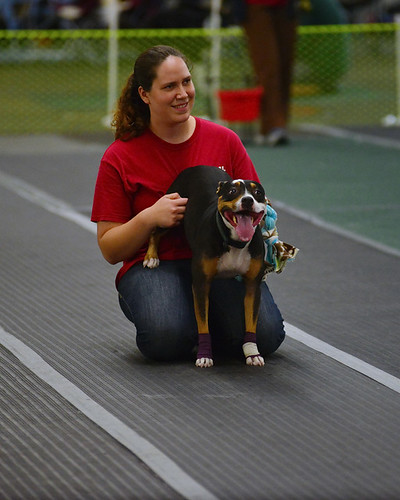
Releasing Koira in start from my lap
Instead of standing over Koira, I am kneeling and pulling her back legs up onto my thighs. This gives her a solid launch platform and seems to focus her attention forward down the lane rather than back or up at me. I actually settled on this release method after trying three different ones and having people watch Koira launch from each of them. Then we decided which one she looked the most balanced during, which ended up being the one you see above- her front legs on the ground, back feet up on my thighs, and me holding onto her hips.
It might not mean a whole lot to you if you don't play flyball, but I'll say it anyway. Changing out starting position like this caused Koira to be much faster (good push off) and more consistent (no waiting for her front feet to hit the ground). So much so, in fact, that we had to back up 6+ feet to start this past weekend versus the weekend before.
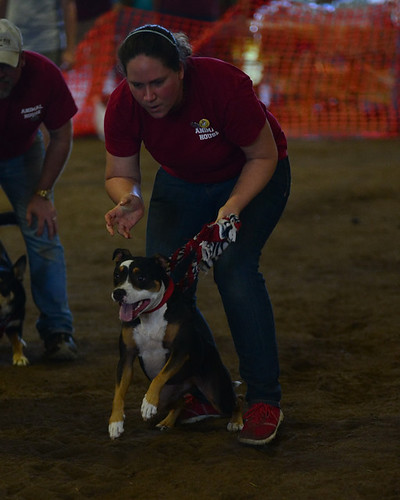
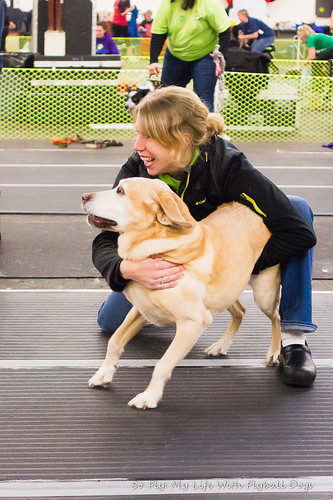
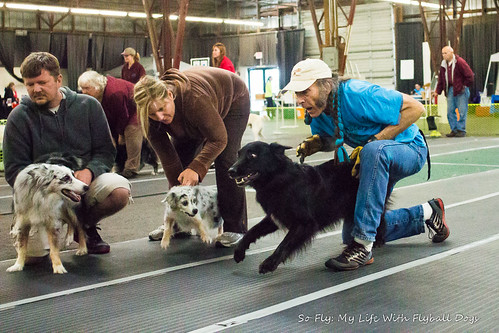
Of course, after spending a lot of time thinking about starting and releasing positions and methods these past few weeks, I ended up getting quite a few pictures of other peoples' starting techniques.
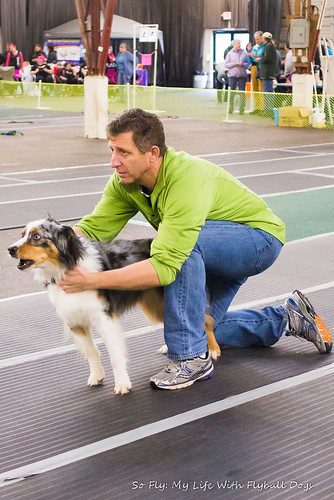
Down on one knee seemed very popular. I actually tried a down-on-one-knee method for Koira, but didn't like it as much for us. From the pictures, though, many people obviously really like this method.
Down on one knee, dog pulled back against other leg, with back foot perpendicular to the racing lanes. This is the closest I have to a picture of the one-knee method I tested with Koira
Although it appears that there are a number of different variations of the one-knee method as well.
Down on one knee, with the dog pulled back against the leg with the knee down.
One knee position, dog loaded back against the leg with the knee down, kept in place facing forward by the other knee
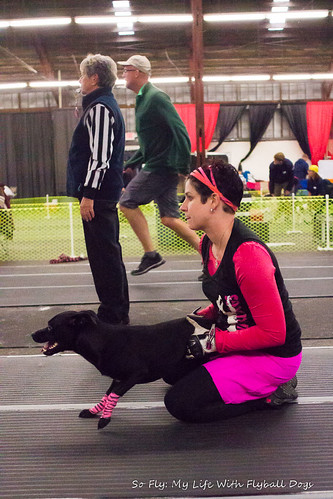
Then, there is this two-knee method. It appears different from the method I use, because the dog is pulled back between the knees with the back feet still on the ground, where as I pull Koira's back feet up onto my thighs.
Both knees down, dog loaded between the legs with back feet still on the ground
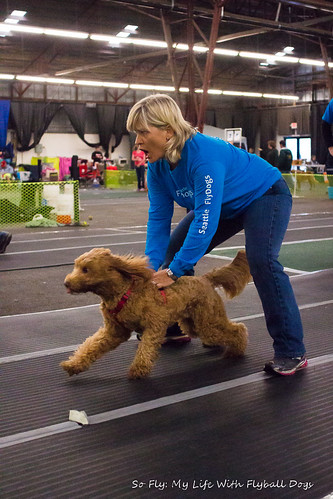
There are also a number of ways to start your dog while staying standing. I will say that these tend to be easiest on the handler, because you don't have to get up quickly from these. If you have a short dog, though, your back can get sore from leaning over so much.
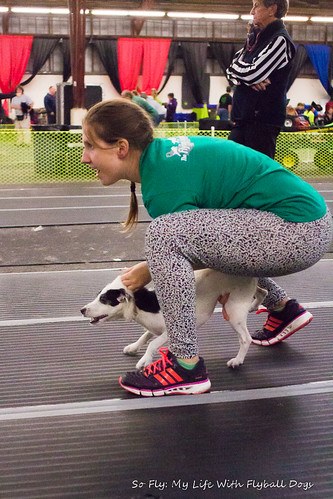
The first of the standing positions is more of a crouch. The knee isn't actually on the ground, but is certainly bent.
Somewhere between a one-knee method and a standing method, this crouch is none-the-less quite effective for this team
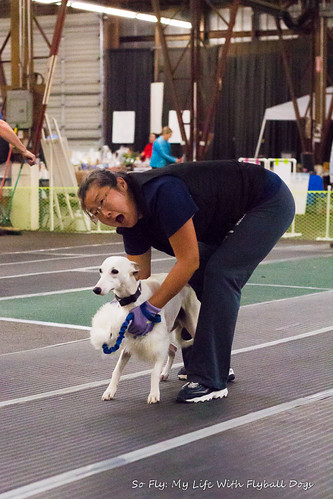
And then same thing here, only with the legs a bit straighter. Also, this whippet appears to be pulled back against the leg that is farther back, to give a better launching platform.
This whippet is obviously very forward focused, and you can see how it is crouching down a bit, anticipating being released to run.
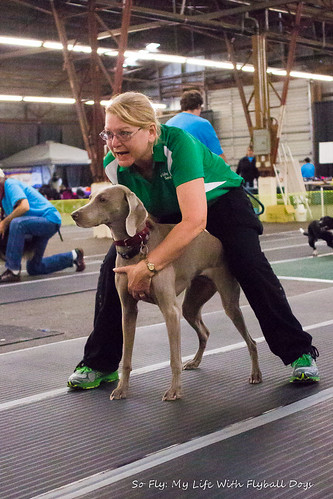
The straddle method is very popular as well.
Lacey, the dog here, is super mellow while waiting, but runs really well once released. All her handler has to do is let her hands drop away from Lacey
And this dog is obviously incredibly excited and raring to go.
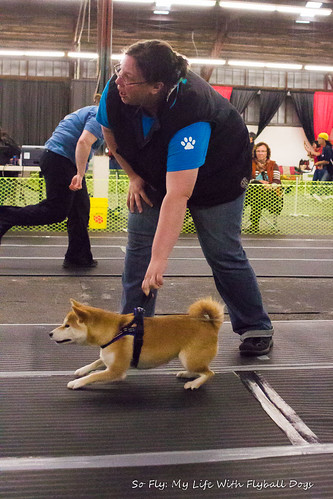
Last but not least is the side release standing position, with the dog fully off to one side of the handler.
This little shiba was also very obvious about wanting her turn as well.
All of these positions can work great depending on the specific dog/handler team. I'm also positive that there are plenty of other release methods that I didn't get a picture of! Some dogs need a really steady launch platform on or against their handler, while others crouch down to the ground or simply dig into the ground with their feet. While there might be a right way for a certain dog and a certain handler, there is definitely not a right way for all dogs and handlers. If you are struggling with how to release your dog, get a training buddy and practice. Try out the different methods while just doing recalls with your dog and see which ones feel the best for you and look the most balanced for your dog. As I found out this past weekend, it can make a huge difference in how your dog runs if you find the right release.
Pallo is taking a break from flyball. The issue he was having at the last tournament, where he would stop after I released him just before or just after the first jump, has continued regularly at practice and has gotten worse. I don't believe it is a conditioning problem, and a quick exam by a sports vet didn't show anything particular to worry about in terms of an injury causing the problem. Pallo is still happy to go on runs, play fetch as much as possible, play on the beach, and generally enjoy life in all other ways. He just stops when running flyball sometimes.
It isn't every time. Its more like 2 or 3 times out of 5 that he will stop. But it is consistent and ongoing and none of our various ideas have solved the problem. So far, we tried switching box loaders, since the issue started soon after we had a new team mate start box loading in preparation for the tournament. I tried running with him past the first jump, rather than my normal routine of following him at a run down to just before the start line, waiting until he hits the box and is on his way back, and then taking off to run in the opposite direction. I tried standing down near the box, having a teammate release him, and running back down the lane with him after he got his ball.
That last one was the most successful of all the things we tried. But even then, he did hesitate a few times, and paused once, though he never totally stopped dead like he has been doing.
Here's the deal. I don't want to force my dog to play a game if he isn't interested. He seems excited to play and gets very amped up going into the building, doing runaways, and before being released. But if he just isn't into playing flyball, I am not going to force him to play. So we are taking a break.
Koira is staying in flyball, so we will still be going to practices. We have two tournaments this month and one next month, and Pallo will be sitting out of all of them. If he comes to practice, he will be hanging out with us during set up and tear down, not playing flyball. In the years since I first adopted him, he has never had a sustained break from the sport- no more than a couple of weeks off at a time.
After a few months, I will bring him back in and see what he does. Hopefully he will be excited and eager to play, without any indication of this current issue. If it does come up again at that point, we will be doing some serious reevaluating and decision making then. I honestly expect the break to solve the problem. If Pallo is interested and excited about playing flyball, taking some time off will make him extra excited when we return to playing. Koira has had numerous breaks throughout her career, though mostly because I grew frustrated with her training progress. And, thinking about it, I really believe that taking a break is important. We certainly won't be stopping our runs, our games of fetch, or any of the other things we do. We may even add in a new sport or something so we have a new game to train.
Right now, he is not retired. We are just taking a break.
My internet was down for the past week and it was all I could do to get to the library to check email. The internet at home is back up now, though.
One of the fun tricks Pallo knows is to do a banking turn off of vertical or slanted surfaces. It was part of flyball training that originally motivated me to teach him this, but now, it is just another fun trick to play with.
Last night at flyball the dogs did pretty awesome. Pallo's ball dropping has reappeared somewhat, but he is running well for the most part. I am making sure to reward him only when he carries the ball to me, and not at all if he drops it early. Since we have a much smaller runback at practice than we will at tournaments, I am hoping the ball dropping isn't too much of an issue at our upcoming tournament.
Koira's turn is doing awesome. We are right now working on her getting a good solid four footed snap off turn without a prop in. Since we are headed to a tournament the second weekend of February, I am hoping her turn is good enough to get her through singles without having to be pulled. So far, it is looking good. To fade the prop in front of the box, I am doing a few things. The first is that I put white tape on the front of the box, so it visually looks similar to there being a white prop there. In practices, we are doing full runs in lineups of 2-4 dogs. We generally do five heats twice through the night. I am having someone put a prop in for Koira's first, third, and fifth heat, but pull it out for the second and fourth. For the most part, her turn is staying high. I am withholding her tug reward if her rear is not staying high on the box with the prop out, and giving her a party when she keeps a nice high turn with no prop.
At home, we are also working. I have been sending her a short distance (my house is small and it is wet outside) to the box, without a prop. No reward for poor turns, big fun for good turns. If she does two poor turns in a row, the prop goes in for one turn, then back out. I think it is helping make things click for her, the difference between what I want and don't want. We've been doing these practices most every day for the past week, and will keep them up daily until the tournament.
I also built a wall board for Koira, which I haven't tried out yet. It is basically a piece of (thick) plywood that is 2 feet by 3 feet, and covered in padding. I found those interlocking multicolored squares that they make for kid's play rooms for a buck at a thrift store, so decided to use those. Yes, the board is kind of...colorful... as a result. The point of the wall board will be to practice high, fast turns with no chance for "running" across the box or double hitting at all, since it is close to impossible to double hit on a vertical surface.
Something I noticed while doing training at home is that Koira is apparently thinking we are doing two different games based on where I am standing. She does beautiful box bounces (no ball) if I am standing up near the box off to the side. Same with using the wall board. But, she has no idea how to do a bounce if I am backed up and releasing her toward the box/board, rather than standing next to it. She only gets it if there is a ball in the box. Which leads me to believe that I need to somehow show her that these games are in fact one and the same, and that she can run down and do a turn off the box, even if there isn't a ball there. Any ideas on how to do this?
Pallo is doing fine. No more seizures, nothing out of the ordinary. Though, he looks anything but ordinary when his picture is taken with the GoPro, in poor lighting, at high speed, and at close range. (I shall now proceed to pepper this update with unrelated pictures taken with the GoPro while on a walk at the park.)
Lets see...
I've been battling a cold, and still am, but feel like I'm on the mend. I think the stress of Pallo's seizure did me in, since I got sick the next day. I did still take the dogs to flyball practice Thursday night, because at that point, I just thought my headache was from not enough sleep the night before, rather than the precursor to a cold.
Koira laid down to rest every few feet on the way back to the river
Koira is doing really good with her turns. Her box work is coming along nicely. Right now, we are working on fading the upright of the box jump so that we can switch to using gutters in front of the box. The upright on the box jump can do a lot of shaping of a dog's turn, making them turn tighter. Some dogs don't notice it much, while others have a hard time with it suddenly gone. Koira is doing okay with it fading, so hopefully in another few practices we will be able to take it out entirely. Her turns are showing a little bit of double hitting occasionally, but since her rear is staying high, I'm not going to mess with it. As long as she hits high enough to do a safe turn, I'm happy. I'm hoping she will be ready to race by the next tournament (which, since I have to work during the weekends of every tournament for the rest of this year, might actually be a realistic goal).
It is a Pallo-centric world
The dogs are pretty bored stiff since I have basically been working, then laying in bed concentrating all my energy on getting well. The couple of play sessions in the yard are not enough for them to really settle, but I think taking them out in the steady rain and getting soaked to the bone would be bad for my health at this point.
So here's to another great week ahead of us. Hopefully we'll get a few breaks in the rain and I'll feel more up to taking the dogs out for some serious energy burning time.
Part Two of Making Flyball Safe (see Part One: Box Turns)
I often hear people mention that flyball is not a safe sport. Generally, these are people who are involved in other dog sports such as agility, disc, obedience, or freestyle. They are experienced dog people. They simply haven't been exposed to flyball in a proper way.
The flyball box is not the only component out on the flyball lanes, of course. When you ask a dog to run at top speed over hurdles, there are risks involved. The most important thing is to minimize those risks as much as is possible.
It is not unheard of for a dog to hit the jump with their feet or legs while navigating the course. It is our job as trainers and handlers to train the dogs to not hit the jumps, give them the skills to navigate properly, and minimize the risks for if they do hit a jump.
Flyball jumps, unlike those used in agility, are solid. A flyball jump is a 6 inch tall, two foot wide base board and two uprights on either side of it. The most common material for the jump to be made of is plywood, but more and more jumps are being made out of Sintra, a rigid foam board material. Sintra is softer than plywood, making it safer in case of collision between dog and jump. To adjust the height of the jumps, slats are added on top of the 6 inch base board. Slats can be 6, 4, 3, 2, or 1 inches wide, and any combination of them can be used to reach the appropriate height. However, a one inch slat is required to be on top. The one inch slat is the easiest to break due to how thin it is. Slats are made out of either very thin plywood or else, more desirably, Sintra.
Ideally, if a dog knocks a jump slightly, the bump won't be enough to cause injury. If the bump is harder, it will hopefully break the slat, giving way to prevent injury to the dog (Sintra does not become sharp when broken). In practice, to further minimize risk of injury, we put cut pieces of either foam pipe insulation or slit pool noodles over the top of the jumps. This greatly reduces the chance that a glancing blow of the paws on the top of the jump will cause any injury.
The equipment, however, is only part of the equation. Training is the other part. We spend time every practice having the dogs navigate over the jumps. Since the jumps are always ten feet apart and fifteen feet from the box, the dogs easily can learn an automatic pattern on how to jump safely. Various methods can be used to help dogs adjust their striding to additionally minimize risks of hitting the jumps. For example, dogs who launch early for the first jump can be at risk of hitting the jumps as they make themselves stretch and reach in midair to clear the jumps. Stride regulators can help train these dogs to make that first launch closer to the jump, so that the apex of their stride is directly over the jump.
Occasionally, it is helpful to teach the dogs about what to do if the jumps are NOT exactly 10 feet apart, or not straight, or are different heights. Mistakes can happen, another dog can knock a jump askew, and it is important to teach the dogs to deal with this. We don't do it often, as we want them to pattern to the jumps at regulation distance, but it can be very helpful to run jump drills with things askew occasionally.
Knocking the jumps over completely, making them a little crooked, setting them to different heights, all of these are ways to help teach a dog to deal with these same issues if they happen during a real race. I always start with a single jump and carefully encourage the dog to jump over it safely, be it askew, a strange height, or completely over on its side. Once the dog is comfortable with jumping the not-right obstacle, I will add in another jump. The goal isn't to train the dog to jump strange configurations of the jumps, and I would actually prefer, if the jump is extremely off during a competition, that I either not run my dog or, if it is too late, that my dog skip the jump. But I think that my dog is much safer on the course if introduced to irregularities in safe, controlled settings.
I often hear people mention that flyball is not a safe sport. Generally, these are people who are involved in other dog sports such as agility, disc, obedience, or freestyle. They are experienced dog people. They simply haven't been exposed to flyball in a proper way.
Years ago, flyball was a sport that risked some pretty significant injury, especially from repetitive stress. Before the modern flyball box was created, dogs were trained to run fast down the lane, slam into a pedal with one or both front feet, coming to a complete stop, catch the ball as it launched, then pivot and run back to their handler. Both the abrupt stop and the hard pivot were likely to (and did) cause injuries, both acute and, more often, chronic. Arthritis in the front shoulders was common in older flyball dogs.
Flyball, however, has come a long way since then, in both equipment and training. Flyball boxes now have holes positioned to either side, instead of in the center. The front pedal is a padded surface large enough for all four feet to land on, instead of just one or two feet. Thrusters launch the ball more efficiently and predictably. We now spend months training dogs to use all four feet to create a smooth "swimmers turn" on the box, eliminating the abrupt stop and slamming of the front feet, legs, and shoulders and also the stress on the back and rear from the following pivot. The swimmers turn allows dogs to safely retrieve the ball from the box more quickly and with less stress on their bodies.
Those who have followed my blog for a while will know that I have been spending, quite literally, years training Koira to have a proper box turn. This isn't out of some desire to have a super fast dog, or win races, or set records. I want her to have a good turn so that she is able to play flyball safely and with the minimum amount of stress possible on her body. Some dogs who run slower and self-regulate how hard they hit the box may be able to run flyball for years with a poor turn without any injuries. Koira, in my opinion, runs too hard and too fast, and has too little self preservation instinct, to be allowed to do any sub-standard turns without a risk of injury. (As a note, normally it should not take this long to train a safe turn. Unfortunately, I trained Koira with a poor turn before I knew any better, and have since spent years trying to correct it.)
I would compare training a proper box turn in flyball to training good contacts in agility. It can be hard. Some dogs take to it super fast, others take forever to learn it, and some need constant reminders about how to do it right. If you don't bother to train contacts, your dog may never hurt themselves, but the risk is much higher that they will launch themselves off of a piece of equipment early and become injured. There are many different strategies for training contacts. Some work better for some dogs and less well for others. But it is important to spend the time and effort to train it properly.
All of these things are true in flyball as well, except that in flyball, the dog and the team are not penalized for a poor turn (while a missed contact in agility is penalized). This means that the handler has the burden of doing the right thing in training to keep their dog safe. They have to spend the time and effort in training, not to succeed in the sport (though dogs with good turns have much faster times) but to keep their dog safe and healthy. Sometimes, this means training a "good enough" turn that the dog will consistently perform without a high risk of injury, but without spending years to train the "perfect" turn. A "good enough" turn depends a lot on the dog. (Some dogs can perform a three-footed turn safely for years without a significant risk of injury. Other dogs may do a three footed turn in a way that increases risk of injury.)
I urge those of you who hear (or especially those of you who say) that flyball is not safe to spend some time checking out what goes into making this sport as safe as possible for the dogs who play it. Is there a risk of injury? Of course. Every time you let your dog play fetch, go swimming, or play any sport, there is a risk. The goal in all fun activities should be to minimize that risk as much as possible. I believe that is what good flyball trainers and teams do.
Here is a video of Koira's box turns at flyball practice this week.
ETA:
I wanted to reply to the first comment here, so others would be able to see my response.
First, yes, this is a big improvement over her turn this time last year. In fact, this upcoming tournament next weekend is the last tournament Koira ran in, afterwhich I pulled her from competition to retrain her box turn. At this point, there are things I would like to see better about her turn (her rear higher, no double hitting with her front feet). However, I would be perfectly happy if she kept this turn for the rest of her career in flyball, as long as it stuck once we start fading the props. The problem is, I don't think it will. Her rear is already pretty low, and I think that once we start fading the props, her rear is going to drop even more, and she will try to go back to a slam-and-grab where her back feet never come close to the box.
For the striding, its a little different. Generally, for most dogs in flyball, you want them to have three strides in and three strides out (between jump and box and jump). Dogs are faster on the ground than in the air, so when a dog takes two strides instead of three, they are losing time. Additionally, if a dog takes only two strides off the box, they often are launching themselves for the jump early, causing stretched out jumping, and increasing the risk of them slamming into one of the jumps. That said, it isn't something I am too worried about with Koira. I may see if a stride bump gives us three strides, and if that will stick, but to be honest, my main focus will be on getting her turn to remain high and tight, even when we start fading the props.
This entire year is one of the many reasons you should always be careful to train your dog right the first way, in anything. It takes way more time to retrain a proper behavior than it does to train the right behavior in the first place. Many people would probably have given up on changing Koira's turn and just let her run with it. I think she hits the box way too hard to make that a safe choice (though for a dog who doesn't run as fast or hit as hard, it would be something I would consider).
Don't forget to check out my Happy Tails Canine Spa review and enter the giveaway. And of course participate in the blog hop for a chance to read about more products reviewed and enter some more awesome giveaways.
This week we lucked out and had practice in two sports, both lure coursing and flyball. We headed out for a very small group lure coursing practice on Tuesday evening, with a total of six dogs there to run the lure.
I ran each of my dogs by themselves twice, then, just for kicks, ran them together for the last one.
I had someone else release my dogs for me, so that I had a chance to get some pictures of them. My conclusion is that I need a longer lens to get seriously good lure coursing pictures. And that Koira is WAY faster than Pallo (at least in lure coursing, since their times are about the same in flyball). I did also act as catcher for the two whippets who came out to practice (the other two dogs were a miniature Poodle and a shepherd mix puppy).
Watching those whippets run is always pretty amazing.
Then, on Thursday, we headed off to our regular team flyball practice. Since I learned a lot about my camera's settings while at the flyball tournament last weekend, I decided to try for some new pictures of the dogs using my new knowledge. I think there is a lot of room for improvement still, but that these are way better than the ones I took last time I pulled out the camera at practice.
Team dog Joy, still learning her box turn
And, of course, the highlights of practice are some basic achievements. Pallo ran steady. It is basically just expected of him now.
Tank, a solid team dog
Koira, on the other hand, had some awesome work (which for her is worth remarking on). After racing on Saturday at the tournament, I got some great advice from a couple of very experienced flyball trainers about how to work on Koira's box turn. I tried it out for the first time at practice, and I have to say, it looks like this may be the method we needed to find.
Zip, a slightly crazy but ultimately loving and adorable team dog, who has become way more reliable than anyone would have thought possible a year ago.
Basically, Koira didn't have a single double hitting issue. She wasn't super solidly amazing every time, but her turns looked good, she snapped off the box quickly, straight to her tug, and she had NO double hitting or readjusting of her feet. Hopefully with steady training sessions she will be able to relearn a proper box turn this time. One that sticks!
PS: You may have noticed a slight change in the sidebar, if you are observant. Yes, Pallo earned three new titles this past weekend, his first U-Fli titles. Way to go little man!
Just a quick post to share a little about the weekend. I spent all day Friday cleaning the car, packing up, and then driving down to Gridley, CA for the flyball tournament. We arrived a little after 7pm, and ended up heading to dinner with one of the teams down there who were all camping at the tournament site. It was plenty warm for tent camping.
I set my alarm for 6:15 the first morning. With check in at 7, followed by measuring, then racing at 8, I wanted to give myself plenty of time to shower, walk the dogs, and eat. The jack russel alarm from the next camp site over, however, was set for 5:30, so I ended up with an even earlier start (the JRT alarm held off until 5:45 on Sunday morning).
I know most of my readers don't run flyball, so I try not to do play-by-plays of the weekend that most people don't end up understanding. So, here is the quick version.
Pallo measured in U-Fli for the first time, and sets 6 inch jumps. U-Fli has a different measuring system, using the length of the bone in the foreleg to determine jump height, instead of the dog's height at the withers. We ran 3/3 on Saturday and 5/5 on Sunday (meaning each race is made up of 3 or 5 heats). Pallo ran like a rock star. His best time for the weekend was a 5.1, and he pulled off plenty of 5.2 and 5.3s for the weekend. He held his ball solid, and ran perfect. The only error we had all weekend was mine, an early pass late in the day on Saturday.
Gold Coast Flyers, the team we were running with for the weekend, was hosting the tournament, and did a great job. Everyone was super helpful and friendly. I did lunch and dinner with them, and we had a good time. After dinner, I even had two awesome, very experienced flyballers take a look at Koira's box turn and got some advice about how to train it.
All the people we met were awesome. I spent a lot of time taking pictures, trying to get some of every dog and every team. I think I finally figured out how to change my camera settings to get decent pictures in the dim indoor lighting of dogs moving at lightening speed- it was a trade off between grain and blur, and I chose grain. And, a ton of people were awesome and used my camera, set on the tripod, focused, and ready to go, to take pictures of Pallo while he ran as well. For my first time taking pictures at a tournament, I think it went really well. I'm looking forward to taking pictures at our outdoor tournament in July though, for the better lighting.
We ended early on Sunday, at just after 2. Pallo was super tired, and conked out in his kennel until I packed up. I stayed to help with some of the clean up and for the awards ceremony, then headed on home. I stopped in Yreka, CA, just south of the Oregon border, for dinner and to check out the solar eclipse, which was total in that area. I ended up getting home about 11:30 last night.
I handed off my camera to a team mate at practice on Thursday and he managed to get a couple good pictures of Pallo on the box. We also found out that Pallo doesn't really mind the flash on right in his face, he is too focused on doing his job.
And no one said flyball was elegant. Huge amounts of spit are permitted.
This is Zip, a Tervuren on our team. She gets super excited about flyball, and is a barking, slobbering maniac with a high-pitched, ear-shattering yodel of happiness. I think she looks kind of like the saber toothed squirrel from Ice Age when she peels back her lips and nose to get a really nice, loud bark going on.
Pallo is doing good with flyball. He is holding on to his ball the whole way back, and we are working on having him do this even with another dog passing into him. He has dropped early (not before the line early, but before I want him to early) a couple times, but it takes only a simple reminder that no ball means no tug and he remembers to hold the ball the whole way.
This is what Pallo looks like after running flyball- tired, tongue out, hot, glassy eyed.
Koira is still not doing flyball while she rebuilds some more muscle. I do bring her along, though, and bring her in to the building for obedience practice after we finish cleaning up from flyball. I am not doing anything super serious with her, just working on her giving me her full attention, doing some sit-walk-arounds and down-walk-arounds, as well as doing long sit and long down practice (we are doing 1 and 3 respectively with those). She still breaks her stays some, but more just by shifting position than anything else. We're working on it.
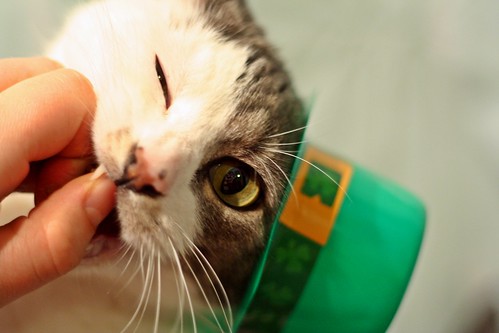
And, one out take from my St. Patrick's Day photo session.
Martha wasn't too sure about wearing the hat for pictures, so I had to so some click-and-treating with her to get her used to it (I use the camera shutter as the click for this type of training). Once she realized that she got treats for leaving the hat alone, the rest of the session was about as easy as you can expect any cat photo session to be. The picture, by the way, is of her getting her treat, not biting me.
So, not sure if anyone will even understand this, but Koira made an awesome breakthrough today at Flyball practice.
Edited to add some pictures (taken a couple weeks ago)
Koira's turns have been decent with a prop in front of the box. She gets four feet on the box, doesn't do any double hitting (none of her feet hit the box more than once), and she pushes off strongly with her back legs. I have been rewarding this type of turn heavily with her, emphasizing her high foot placement on the box.
Koira's turn. Yes, her back feet did end up on the box, high on the box, during this turn. But, those hind feet are more like an after thought.
Today, I saw what her turns can look like. Instead of hitting the box front feet first, then bending her body around and allowing her rear feet to follow, then pushing off the box, she did something I didn't even realize I wanted her to do, before.
This is a pic of Koira during our warmup. We do restrained recalls over jumps and start the dogs off from the box like this for those.
Koira jumped toward the box, then did a sort of mid-air twist thing, hit the box with all for feet, then rocketed off. It sounds weird when I say it like that, and I don't even know if even the flyball people will get what I mean when I say it. But, you know how those super fast dogs, like the ones Touch N Go runs, seem to just leap into the air straight toward the box, then miraculously manage to turn in mid air, landing with all four feet properly placed on the box, with the hind feet hitting almost the same time as the front, then have a good, strong, push off with all four feet? That's what I saw Koira do for the first time today.
Pallo's turn at practice, nice and high. But, still not as awesome as the turn I just saw from Koira this week. Really, I think most dogs just aren't built for doing that type of turn.
The first time she did it was in our first session at practice. It was her 6th turn or so, and when I saw that awesomeness, I could tell it was the turn I wanted but didn't know how to get. I quit there, giving her a big game of tug and a release to get some water.
When we came in for our second session (we work all our dogs twice, for shorter sessions, for best results), she did it again. The mid-air rotation was actually so much there that she got her back feet too high and missed the face of the box with one of them. We put in a slightly shorter PVC jump prop in (we had a triple gutter and a PVC jump as props) to not push her so high. And, her rotation was amazing.
Pallo supermanning it over a jump at practice, tongue out in concentration
The last two turns she did were a bit sloppy. One foot was low on the box, and she had trouble getting the ball fully in her mouth. But, those last sloppy turns still seemed better than the fast turns she started with at the beginning of the first session. Because, instead of hitting with her front feet, then her back, she was still doing a really good mid-air rotation.
I am super hopeful that with more practicing, she will keep this up. By learning this rotation type turn, I think the turn will stick with her a lot longer and better than her old turning style. Frankly, the turns she gave me today were even better than any turn I've ever seen from Pallo, and I have always loved his turns (and been complimented on them a lot at tournaments, so its not just me).